
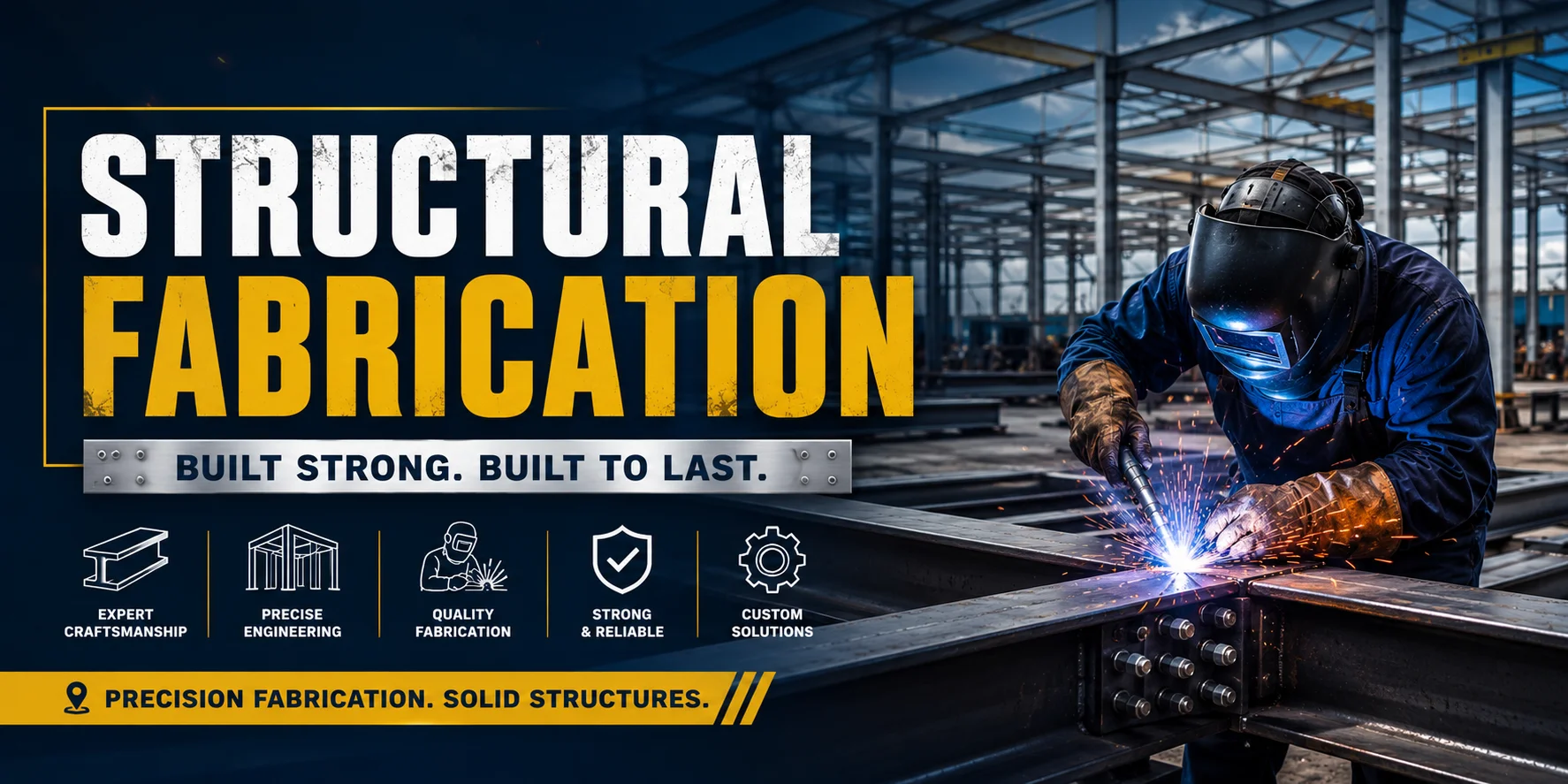
Structural Fabrication Services in Bangalore: Steel Structures, Process & Applications
Looking for reliable structural fabrication services in Bangalore? Strong steel structures require suitable materials, accurate fabrication and proper coordination with approved engineering drawings. Namdev Infratech provides structural steel supply and fabrication support for industrial buildings, warehouses, mezzanine floors, commercial structures and other load-bearing applications.
Every structural project has different requirements. For example, an industrial shed may need fabricated columns, beams and roof trusses, while a commercial building may require steel staircases or mezzanine structures. Therefore, selecting the right steel sections and fabrication specifications is essential for structural performance.
Since 2003, Namdev Infratech has supported construction, industrial and commercial projects in Bangalore. In addition to steel supply, the company offers fabrication solutions, laser cutting and HR plate cutting. As a result, customers can discuss material procurement and fabrication requirements with one team.
Share your structural drawings, project dimensions or steel requirements with Namdev Infratech. Our team can help you discuss suitable steel materials and fabrication options.
Call +91 99162 25677In This Article
- What Is Structural Fabrication?
- Our Structural Fabrication Services
- Applications of Structural Steel Fabrication
- Steel Components Used in Structural Fabrication
- How to Choose the Right Steel Materials
- Our Structural Fabrication Process
- Factors Affecting Structural Fabrication Cost
- Why Choose Namdev Infratech?
- Structural Fabrication in Bangalore
- Frequently Asked Questions
What Is Structural Fabrication?
Structural fabrication is the process of preparing and assembling steel components to create load-bearing frameworks for buildings and industrial structures. These components include columns, beams, trusses, plates, connections and supporting members. Together, they form the framework that carries and transfers structural loads.
Unlike general metal fabrication, structural fabrication focuses on components that contribute to the strength and stability of a structure. For example, steel beams support floors and roof systems, while columns transfer loads towards the foundations. Similarly, bracing members help provide stability to the overall framework.
Structural fabrication typically involves several activities, including cutting, drilling, welding, assembly and dimensional inspection. Furthermore, each component must follow the relevant drawings, material specifications and connection details. Consequently, accurate fabrication helps improve component fit and supports smoother installation at the project site.
However, every structure has different engineering requirements. Therefore, the fabrication scope should consider:
- Building dimensions and structural layout
- Required steel grades and section sizes
- Column spacing and beam arrangements
- Dead loads, imposed loads and applicable wind loads
- Equipment, machinery and floor loading requirements
- Connection details and welding specifications
- Surface treatment and corrosion protection
- Transportation, lifting and installation requirements
For this reason, structural fabrication should follow drawings and specifications prepared or approved by a qualified structural engineer. Material selection and fabrication alone do not replace structural design and approval.
Our Structural Fabrication Services in Bangalore
Namdev Infratech supports structural steel fabrication requirements for industrial, commercial and construction projects. Depending on the project scope, customers can discuss steel supply, cutting, fabrication and delivery coordination.
For instance, a warehouse may require steel frames and mezzanine structures, whereas a commercial building may need fabricated staircases and supporting frameworks. Therefore, we consider the intended application and project specifications when discussing fabrication requirements.
Steel Frame Fabrication
Steel frames form the primary support system for many industrial and commercial structures. These assemblies can include columns, beams, connection plates and bracing members. Accurate fabrication helps ensure that the components match the specified dimensions and connection details.
Mezzanine Floor Fabrication
Mezzanine floors create additional usable space within warehouses, factories and commercial buildings. They can support storage, work areas or equipment, depending on the approved design. However, floor loading and support requirements must be evaluated before fabrication.
Industrial Shed Frames and Roof Trusses
Industrial sheds use fabricated steel frames, roof trusses, purlins and bracing systems. These components support the building envelope and roofing arrangement. In addition, their specifications depend on the building span, roof design and structural loads.
Steel Staircase Fabrication
Steel staircases provide access between different floor levels in commercial and industrial buildings. Depending on the layout, fabrication may involve stringers, treads, landings, support plates and handrail connections.
Multi-Storey Steel Structures
Multi-storey steel structures use interconnected columns, beams and supporting members to create building frameworks. Therefore, fabrication accuracy and coordination with approved structural drawings are especially important for these projects.
Custom Structural Steel Assemblies
Some projects require specialised frames, support structures and fabricated steel assemblies. For these requirements, customers can share drawings and specifications so the fabrication scope can be reviewed before production.
Explore our structural fabrication projects to view examples of industrial and commercial steel structures.
Applications of Structural Steel Fabrication
Structural steel fabrication supports a wide range of building and industrial applications. For example, factories use steel frameworks for production spaces, while warehouses require structures that accommodate storage and material movement. Meanwhile, commercial buildings may use fabricated steel for floors, staircases and supporting structures.
Similarly, infrastructure-related facilities and engineering workshops may require custom steel assemblies. Consequently, the fabrication approach should reflect the building's purpose, dimensions and engineering requirements.
Industrial Buildings
Factories and industrial facilities use steel frameworks to support production areas, machinery spaces and other operational requirements. Additionally, the structure must account for applicable equipment and building loads.
Warehouses and Storage Facilities
Warehouses use structural steel for columns, beams, roof trusses and other supporting components. Therefore, the structural layout should consider storage systems, movement areas and clear-span requirements.
Commercial Buildings
Commercial projects may require steel frameworks, mezzanine floors, staircases and supporting assemblies. These components can be fabricated according to the architectural layout and approved structural specifications.
Manufacturing Units
Manufacturing facilities often require specialised structural arrangements for machinery, production lines and internal material movement. As a result, structural planning should account for operational loads and future requirements.
Engineering Workshops
Engineering workshops use fabricated steel structures for work platforms, equipment supports and building frameworks. In addition, suitable access and working clearances should be considered during planning.
Mezzanine and Platform Structures
Mezzanine floors and steel platforms help create additional usable space. However, their support arrangement and loading capacity must follow the approved engineering design.
For warehouse-specific structural requirements, read our guide to warehouse and shed fabrication in Bangalore.
Steel Components Used in Structural Fabrication
A structural steel framework uses different components to transfer loads and provide stability. For example, beams and columns form the main framework, while plates and angles help create connections and supporting assemblies. Similarly, channels and structural pipes are used in selected applications.
However, each component has a specific purpose. Therefore, the material grade, dimensions and section sizes should match the structural drawings rather than being selected only by appearance or price.
| Steel Component | Common Applications | Structural Purpose |
|---|---|---|
| Structural Beams | Building frames, floor supports and roof structures | Transfer loads between supporting members |
| Steel Columns | Industrial and commercial building frameworks | Transfer structural loads towards foundations |
| MS Channels | Frames, supports and secondary structures | Provide support in specified structural arrangements |
| MS Angles | Bracing, connections and support assemblies | Provide support and connection elements |
| MS Plates | Base plates, gussets and connection plates | Connect and support structural members |
| Structural Pipes | Frames, columns and selected support structures | Provide tubular structural members |
| Roof Trusses | Industrial sheds and warehouse roofs | Support roof systems and transfer loads |
In addition, fabrication drawings should clearly identify component dimensions, connection details and material specifications. This helps reduce discrepancies during cutting, assembly and installation.
Browse our structural steel products to explore materials used in construction and fabrication applications.
How to Choose the Right Steel Materials for Structural Fabrication
Choosing suitable steel materials is an important part of structural fabrication. The correct selection depends on structural design, loading conditions, component dimensions and the intended application. Therefore, customers should review engineering specifications before confirming material requirements.
1. Check the Required Steel Grade
First, review the steel grade specified in the approved drawings. Different structural applications may require different material properties. However, a higher grade should not be selected automatically just because a structure carries a larger load. The structural engineer should determine the suitable grade based on the design.
2. Select the Correct Steel Sections
Next, identify the required beams, channels, angles, plates or pipes. Each section serves a different purpose within the structural framework. Additionally, the dimensions and thickness should match the specified drawings.
3. Review Fabrication Requirements
Furthermore, consider the cutting, drilling, welding and assembly requirements before procuring materials. For example, complex connections may require accurately prepared plates and specific hole locations. As a result, reviewing fabrication details early can help reduce rework.
4. Consider Corrosion Protection
Meanwhile, evaluate the building's environment and exposure conditions. Steel structures may require suitable surface preparation, protective coatings or other corrosion-control measures. Therefore, the finishing specification should be confirmed before fabrication or delivery.
5. Check Material Availability and Quantity
Finally, confirm the required steel quantities, section availability and delivery schedule. In addition, consider the cutting plan and expected material wastage when estimating procurement requirements.
For related material guidance, explore our article on choosing roofing sheets for industrial buildings.
Our Structural Fabrication Process
A planned fabrication process helps coordinate material selection, component preparation and delivery. At Namdev Infratech, customers can discuss their structural drawings and steel requirements to establish the relevant supply and fabrication scope.
Depending on the project, the process may include the following stages:
01. Project Requirement Review
First, we review the project application, dimensions, drawings and material requirements. This helps identify the main steel components and the scope of fabrication.
02. Drawing and Specification Review
Next, the available fabrication drawings and material specifications are reviewed. Any design or structural changes should be confirmed by the responsible engineer before production begins.
03. Steel Grade and Material Selection
Once the specifications are confirmed, the required steel grades, section sizes and quantities can be identified. Additionally, material availability and procurement requirements can be discussed.
04. Cutting and Component Preparation
After material selection, steel components are prepared according to the required dimensions. Cutting, drilling and plate processing help create the parts needed for the structural assembly.
05. Fabrication and Assembly
Then, components are assembled according to the approved fabrication details. Welding, connection preparation and dimensional checks help maintain consistency throughout the fabrication work.
06. Inspection and Delivery Coordination
Finally, fabricated components should be checked against the relevant drawings and specifications before dispatch. Delivery is then coordinated according to the agreed project requirements.
Important: Structural design, design approval, civil foundations, on-site erection and installation should be confirmed separately according to the agreed project scope. Moreover, the responsible structural engineer must approve any changes that affect the design or load-bearing capacity.
What Affects Structural Fabrication Cost in Bangalore?
The cost of structural fabrication in Bangalore depends on the quantity of steel, material specifications, design complexity and fabrication requirements. Therefore, an accurate quotation should be based on project drawings and a clear scope of work.
For example, a simple steel support frame may require fewer fabrication operations than a multi-storey structural assembly. Similarly, complex connections, special cutting requirements and additional finishing can influence the overall cost.
| Cost Factor | How It Affects the Project |
|---|---|
| Steel Quantity | The total weight and number of required sections influence material costs. |
| Steel Grade and Specifications | Material grade, thickness and section dimensions affect procurement costs. |
| Structural Design Complexity | Special connections, unusual shapes and complex assemblies may require additional fabrication work. |
| Cutting and Processing | Cutting, drilling, plate processing and preparation affect production requirements. |
| Welding and Assembly | The number and complexity of joints influence fabrication time and labour requirements. |
| Surface Treatment | Surface preparation, painting and protective coatings can add to the project cost. |
| Transportation and Delivery | Material quantity, delivery distance and handling requirements affect logistics costs. |
In addition, the project schedule and delivery requirements may influence the overall quotation. Consequently, customers should provide drawings, quantities and specifications to receive a more relevant estimate.
Need a Structural Fabrication Quotation?
Share your project drawings, steel specifications and estimated quantities with Namdev Infratech. Our team can discuss the relevant material supply and fabrication requirements.
Call +91 99162 25677Why Choose Namdev Infratech for Structural Fabrication in Bangalore?
Choosing a structural fabrication partner involves more than comparing steel prices. Material quality, fabrication accuracy, project coordination and delivery planning also influence the overall experience. Namdev Infratech brings steel supply and fabrication capabilities together to support different construction and industrial requirements.
Founded in 2003, the company has expanded from a steel supply business into a provider of structural steel, fabrication and processing solutions. Today, Namdev Infratech handles more than 400 tonnes of material every month.
Experience Since 2003
Namdev Infratech has supported construction and industrial material requirements in Bangalore since 2003. Over the years, the business has expanded its steel supply and fabrication capabilities.
Steel Supply and Fabrication
Customers can discuss steel procurement and fabrication requirements with one team. As a result, coordinating material supply and processing can become more convenient.
Wide Range of Steel Materials
We supply structural steel products such as beams, channels, angles, plates, flats and other materials. However, availability depends on current stock and project specifications.
Fabrication and Processing Solutions
Our capabilities include structural fabrication, laser cutting and HR plate cutting. Therefore, customers can discuss different steel processing requirements for their projects.
Project-Specific Requirements
Every structural project has different dimensions, specifications and fabrication needs. Accordingly, we review the available project information before discussing suitable material and processing options.
Industrial Material Handling
Namdev Infratech handles more than 400 tonnes of material every month. This capacity supports a range of construction, commercial and industrial steel requirements.
Furthermore, customers can explore examples of our completed work through the Namdev Infratech project portfolio.
Structural Fabrication Services Across Bangalore
Bangalore has a growing demand for industrial buildings, commercial structures, warehouses and manufacturing facilities. Consequently, contractors and project developers need dependable steel supply and fabrication support for different applications.
Namdev Infratech serves steel and fabrication requirements across Bangalore and nearby industrial locations. For example, project enquiries may come from Bommasandra, Singasandra, Electronic City, Hosur Road and other commercial and industrial areas, subject to project scope and delivery arrangements.
Whether you are planning a mezzanine floor, an industrial framework or a commercial steel structure, begin with the approved drawings and material specifications. In addition, discuss the required quantities, fabrication details and delivery schedule before confirming the project scope.
Structural Fabrication vs. General Fabrication
Structural fabrication and general fabrication both involve processing and assembling metal components. However, they serve different project requirements. Structural fabrication focuses on load-bearing frameworks, while general fabrication typically covers custom metal products and smaller assemblies.
For example, steel columns, beams and mezzanine structures fall under structural fabrication. On the other hand, gates, railings, brackets, grills and decorative metalwork are generally part of general fabrication.
| Structural Fabrication | General Fabrication |
|---|---|
| Focuses on load-bearing steel structures. | Focuses on custom metal products and components. |
| Includes beams, columns, trusses and mezzanine structures. | Includes gates, railings, brackets and frames. |
| Follows structural and fabrication drawings. | Follows product dimensions, design and functional requirements. |
| Requires coordination with structural engineering specifications. | Depends on the product's intended use and fabrication details. |
Therefore, identifying the correct fabrication category helps customers communicate their requirements more clearly. If your project involves smaller custom metalwork, explore our general fabrication services in Bangalore.
Frequently Asked Questions About Structural Fabrication Services in Bangalore
1. What are structural fabrication services?
Structural fabrication services involve preparing and assembling steel components for load-bearing structures. These may include columns, beams, trusses, mezzanine floors, staircases and supporting frameworks. The fabrication work follows the relevant engineering drawings and specifications.
2. Who provides structural fabrication services in Bangalore?
Namdev Infratech provides structural steel supply and fabrication support for industrial, commercial and construction projects in Bangalore. In addition, customers can discuss material procurement and processing requirements according to their project scope.
3. What is the difference between structural and general fabrication?
Structural fabrication focuses on load-bearing frameworks such as columns, beams, trusses and mezzanine floors. General fabrication, on the other hand, usually covers custom metalwork such as gates, railings, brackets, frames and supports.
4. What materials are used in structural steel fabrication?
Common materials include structural beams, MS channels, MS angles, MS plates, structural pipes and other specified steel sections. However, the final material selection depends on the approved structural drawings, design requirements and application.
5. Do you provide mezzanine floor fabrication?
Namdev Infratech supports mezzanine and other structural fabrication requirements. However, the floor layout, support arrangement and loading specifications should be established through an approved structural design before fabrication.
6. Can you fabricate steel structures for industrial buildings?
Yes. Structural fabrication requirements for industrial buildings may include columns, beams, trusses, bracing systems and supporting assemblies. The exact scope depends on the project drawings and specifications.
7. Do you provide structural design along with fabrication?
Customers should share drawings prepared or approved by their structural engineer. If material or section selection requires clarification, the relevant requirements can be discussed with the team. However, final structural design and approval must come from the responsible qualified engineer.
8. How is structural fabrication cost calculated?
Structural fabrication cost depends on steel quantity, grade, section dimensions, design complexity, cutting, drilling, welding, assembly and delivery requirements. Therefore, sharing project drawings and material quantities helps obtain a more relevant quotation.
9. How long does structural steel fabrication take?
The timeline depends on the project size, drawing approval, material availability, fabrication complexity and order quantity. Additionally, delivery and site readiness can affect the overall project schedule.
10. What details should I share to get a structural fabrication quotation?
Share your project location, structural drawings, steel grades, section dimensions, estimated quantities and required delivery schedule. In addition, mention any special requirements related to cutting, welding, surface treatment or component assembly.
Looking for Structural Fabrication Services in Bangalore?
Discuss your structural steel requirements with Namdev Infratech. We support steel supply and fabrication requirements for industrial buildings, warehouses, mezzanine floors, commercial structures and other applications.
Simply share your drawings, dimensions and material specifications. Our team can then discuss suitable steel products and fabrication options for your project.
Call: +91 99162 25677
Explore: Steel Products | Our Work
Discuss Your Project
4 thoughts on “Structural Fabrication Services in Bangalore”