
- Namdev Infratech
- Leave a Comment on How to Choose Roofing Sheets for Industrial Buildings: A Complete Guide
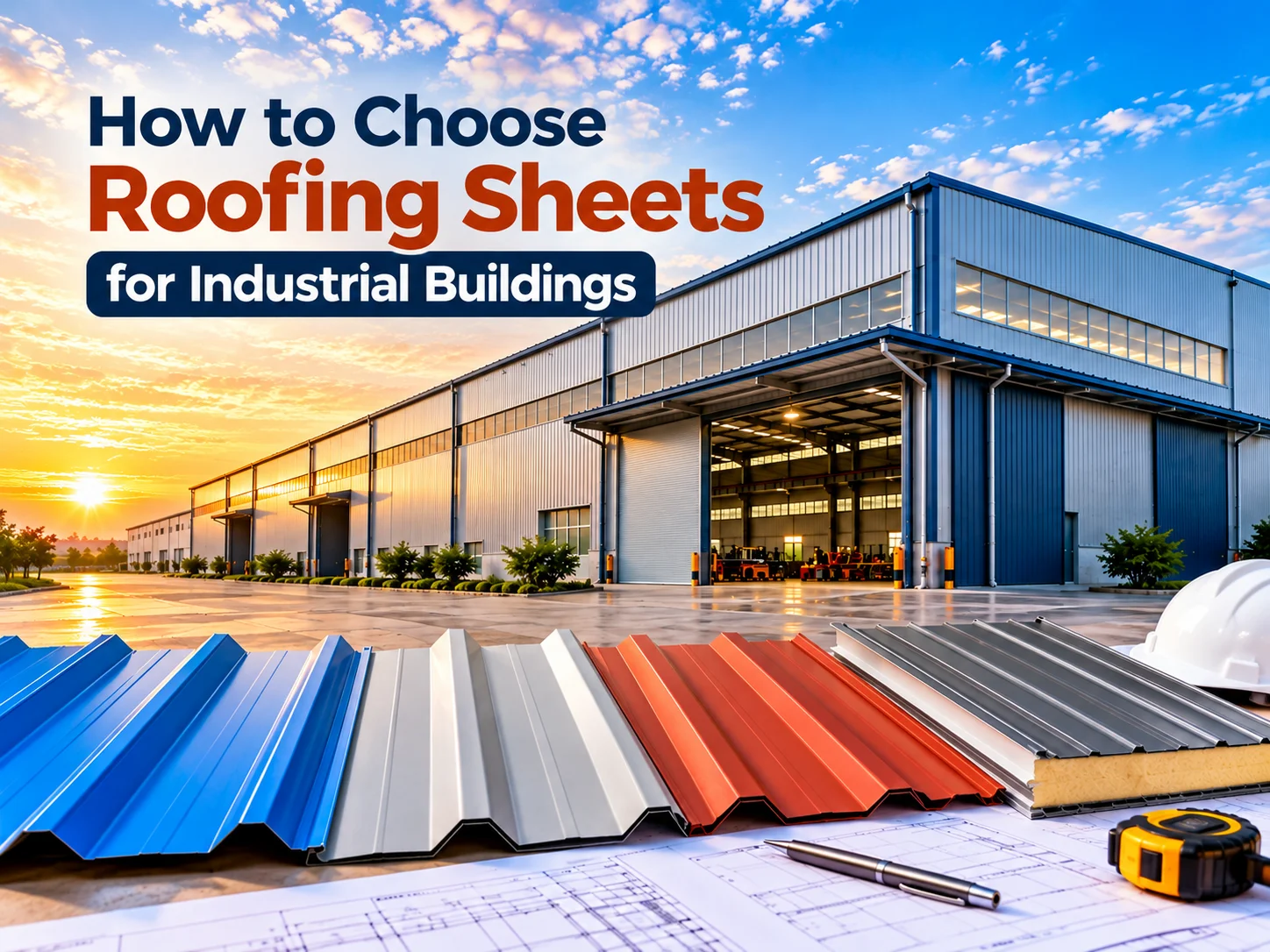
How to Choose Roofing Sheets for Industrial Buildings
Choosing the right roofing sheets for industrial buildings is essential for protecting machinery, raw materials, finished products and daily operations. However, with different materials, profiles, thicknesses and insulation options available, selecting the right roofing system can be challenging. The wrong choice may lead to excessive indoor heat, water leakage, corrosion, frequent maintenance and higher long-term expenses.
Whether you are constructing a factory, warehouse, manufacturing unit or industrial shed, the roofing material should match your building’s design, environmental conditions and operational requirements. Understanding the available options will help you make an informed decision.
In this guide, we explain how to choose roofing sheets for industrial buildings, compare common roofing solutions, identify important specifications and highlight the factors to consider before purchasing.
Which Roofing Sheets Are Best for Industrial Buildings?
Colour-coated metal roofing sheets are a practical choice for many industrial buildings because they offer weather protection, versatile profiles and a range of specifications. However, the best option depends on your building’s location, roof structure, corrosion exposure, insulation requirements and budget. For temperature-sensitive facilities, insulated roofing panels may provide better thermal performance.
1. Understand the Different Types of Industrial Roofing Sheets
Before choosing a roofing material, understand how each option performs in your building environment. Different industrial applications require different levels of strength, weather resistance, insulation and natural lighting.
Colour-Coated Roofing Sheets
Colour-coated roofing sheets are widely used in factories, warehouses, workshops and industrial sheds. They feature a protective coating that improves appearance and helps protect the underlying metal against environmental exposure.
These sheets are available in different profiles, thicknesses, colours and lengths, depending on the product specification.
Key benefits:
- Suitable for a wide range of industrial and commercial buildings.
- Available in different profiles and finishes.
- Can provide an economical roofing solution for large roof areas.
- Compatible with properly designed steel roofing structures.
- Available in different specifications to meet project requirements.
Colour-coated sheets are worth considering when you need a versatile roofing solution with a clean, professional finish.
Galvanised Iron (GI) Roofing Sheets
GI roofing sheets feature a zinc coating that helps protect steel against corrosion. They can be suitable for industrial sheds, storage buildings and workshops when the coating specification matches the exposure conditions.
However, galvanisation alone does not eliminate corrosion. Cut edges, damaged coatings, standing water and aggressive industrial environments can affect service life.
Before purchasing GI sheets, check the base-metal thickness, coating specification and suitability for the building’s location.
Galvalume Roofing Sheets
Galvalume roofing sheets use an aluminium-zinc alloy coating to provide corrosion protection. Depending on the product specification and environmental conditions, they can be suitable for warehouses, factories and other industrial buildings.
When comparing GI and Galvalume products, consider the coating composition, coating mass, installation details and exposure to moisture or industrial chemicals. Avoid choosing solely by the material name.
Insulated Roofing Sheets and Sandwich Panels
Insulated roofing sheets, including polyurethane-filled sandwich panels where specified, combine metal facings with an insulating core.
They can help reduce heat transfer through the roof and improve indoor comfort when the complete roofing assembly is appropriately designed.
Common applications include:
- Manufacturing facilities with temperature-sensitive operations.
- Warehouses storing heat-sensitive goods.
- Food processing and packaging facilities.
- Buildings where indoor temperature control is important.
Namdev Infratech lists PUF sheets among its colour-coated roofing sheet options. Its published product information includes 30 mm and 50 mm thickness options for the listed product. Confirm the required insulation performance and current specifications before ordering.
Polycarbonate Roofing Sheets
Polycarbonate roofing sheets allow natural daylight into selected roof sections. They can reduce the need for artificial lighting during daylight hours, depending on the building layout and lighting requirements.
However, transparent or translucent roofing can also introduce solar heat. Therefore, consider heat gain, UV protection, ventilation and compatibility with the main roofing profile before selecting these sheets.
Explore polycarbonate roofing sheets for suitable daylighting applications
2. Compare Roofing Sheet Materials Before Making a Decision
| Roofing Option | Main Advantage | Suitable Applications | Important Consideration |
|---|---|---|---|
| Colour-Coated Metal Sheets | Versatile profiles and finishes | Factories, warehouses and industrial sheds | Verify coating quality, thickness and structural suitability. |
| GI Roofing Sheets | Zinc-based corrosion protection | Workshops, sheds and storage buildings | Check coating specifications and environmental exposure. |
| Galvalume Roofing Sheets | Aluminium-zinc coating for corrosion protection | Industrial and commercial buildings | Confirm coating specifications and site suitability. |
| Insulated Sandwich Panels | Improved thermal insulation | Temperature-sensitive industrial facilities | Evaluate insulation core, thickness and fire performance. |
| Polycarbonate Roofing Sheets | Natural daylight transmission | Skylights and selected roof sections | Consider heat gain, UV protection and roof compatibility. |
The most suitable option depends on the intended use of the building. For example, a general-purpose warehouse may use colour-coated roofing sheets, while a temperature-sensitive production area may benefit from insulated panels.
Polycarbonate sheets are generally best evaluated for designated daylighting sections rather than treated as a direct replacement for every type of industrial roofing.3. Select the Correct Roofing Sheet Thickness
Roofing sheet thickness influences material strength, resistance to deformation, weight and cost. However, thickness alone does not determine the performance of a complete roofing system.
The correct specification must account for the sheet profile, steel grade, purlin spacing, roof span, wind loads and fastening arrangement.
What Thickness Should You Choose?
There is no single thickness that suits every industrial roof.
Consider these factors before finalising your requirements:
- Roof span: The distance between supports affects the required profile and structural design.
- Purlin spacing: The roofing sheet must be suitable for the spacing and loading conditions of its supports.
- Wind exposure: Roof edges and corners may experience significant wind uplift.
- Maintenance access: Plan for safe inspection and maintenance arrangements.
- Project specifications: Follow the structural engineer’s drawings and applicable design standards.
Namdev Infratech lists PPGI/PPGL profile sheets in 0.30 mm, 0.35 mm, 0.40 mm, 0.45 mm and 0.50 mm thickness options on its product page. Availability and suitability should be confirmed for your specific order.
When requesting a quotation, ask whether the stated thickness refers to base-metal thickness or another measurement. This helps you compare products accurately.
Do not reduce the specified thickness simply to lower the initial purchase price. An unsuitable selection can increase the risk of deformation, damage and premature replacement.
4. Consider Heat Insulation and Indoor Comfort
Industrial buildings can become hot during summer, particularly when large roof areas receive direct sunlight. Excessive heat may affect worker comfort, equipment operation and the storage of temperature-sensitive materials.
Therefore, assess the complete roofing system rather than focusing only on the metal sheet.
When Should You Choose Insulated Roofing?
Insulated panels may be appropriate when the building requires better thermal control. Their performance depends on the insulation material, thickness, thermal conductivity, panel joints and installation quality.
For a general storage warehouse, colour-coated metal sheets combined with suitable ventilation may be sufficient. For a facility with temperature-sensitive goods or processes, insulated panels may offer greater value.
Also consider:
- Roof colour and exposure to sunlight.
- Natural ventilation and mechanical exhaust.
- Air leakage around joints and openings.
- Condensation and moisture control.
- Fire safety requirements for the complete insulation assembly.
Insulation does not replace ventilation, and it does not automatically make a building suitable for controlled-temperature storage. Evaluate the full building design before selecting a system.
5. Evaluate Weather Resistance and Corrosion Protection
Industrial roofs must withstand rainfall, wind, sunlight and environmental exposure. The correct roofing specification depends on the building’s location and surrounding activities.
Important Environmental Factors
Rainfall: Roof slope, drainage, gutters, flashings and sealed joints must work together to prevent water ingress.
Wind: The roof profile, fastening system and structural supports must meet the building’s design wind loads.
Corrosion: Coastal salt, high humidity, chemical fumes and industrial pollutants can affect material performance.
Sunlight: Coating durability, roof colour and insulation influence long-term performance and indoor comfort.
Maintenance: Regular inspection, drainage cleaning and timely repairs help prevent avoidable deterioration.
Even a good-quality roofing sheet can develop problems if the installer uses unsuitable fasteners, leaves poorly sealed joints or overlooks drainage requirements.
6. Choose the Right Roofing Sheet Profile
Roofing sheet profiles influence water drainage, structural performance, appearance and installation efficiency.
Common options include corrugated sheets, trapezoidal profiles and tile-style metal sheets.
What Should You Consider?
- Water drainage: Choose a suitable profile and roof slope for effective runoff.
- Structural performance: Verify the load capacity for the specified support spacing.
- Sheet length: Longer sheets may reduce end laps, although transportation and handling limitations matter.
- Installation efficiency: Appropriate dimensions can help reduce cutting and material waste.
- Roof accessories: Ensure ridge caps, flashings, gutters, closures and fasteners suit the selected profile.
For a large warehouse, a suitable long-length roofing profile may simplify installation. However, the final choice should follow engineering requirements and manufacturer guidance.
7. Calculate the Total Cost of Industrial Roofing
The lowest-priced roofing sheet is not necessarily the most economical option over the life of a building.
A complete roofing budget should account for materials, accessories, transportation, installation, maintenance and potential energy-related benefits.
What Affects Roofing Sheet Prices?
Material and thickness: Different steel substrates, thicknesses and coating specifications influence the price.
Insulation: Insulated panels typically involve additional material and manufacturing costs compared with single-skin sheets.
Profile and dimensions: Custom lengths, specialised profiles and fabrication requirements can affect pricing.
Order quantity: Bulk quantities may offer purchasing efficiencies, depending on supplier pricing and availability.
Accessories: Ridge caps, flashings, fasteners, sealants, gutters and closures contribute to the completed roof cost.
Installation: Labour, access equipment, roof height and site complexity influence installation expenses.
Maintenance: Corrosion exposure, drainage design and accessibility can affect long-term maintenance costs.
When comparing quotations, check that the specifications are equivalent. A lower price may reflect differences in thickness, coating, usable width, insulation or included accessories.
8. Common Mistakes to Avoid When Choosing Industrial Roofing Sheets
Avoid these common mistakes when planning your industrial roofing project.
Choosing Only by Price
A low-cost product may not meet the required structural, corrosion-resistance or thermal specifications. Compare complete product details before making a decision.
Ignoring the Building’s Purpose
A storage shed and a temperature-sensitive manufacturing facility have different roofing needs. Choose materials according to the activities taking place inside the building.
Overlooking Ventilation
Even insulated roofs can experience heat buildup or condensation when ventilation and moisture management are inadequate.
Ignoring Fasteners and Flashings
Incorrect fasteners, poorly sealed joints and inadequate roof-edge detailing can contribute to leaks and premature deterioration.
Failing to Check Structural Requirements
Roofing sheets must match the building’s purlins, design loads, support spacing and wind conditions. Obtain engineering approval for the complete system.
Not Planning for Maintenance
Industrial roofs need periodic inspection. Plan safe maintenance access and practical arrangements for drainage, cleaning and repairs.
9. Checklist Before Ordering Industrial Roofing Sheets
Before requesting a quotation, prepare the following information:
- Building application: Factory, warehouse, workshop or storage shed.
- Roof dimensions: Total roof area, slope, span and available drawings.
- Structural specifications: Required profile, thickness, support spacing and loading details.
- Insulation requirements: Standard roofing sheets or insulated panels.
- Site conditions: Location, rainfall, wind exposure and corrosion risks.
- Quantity requirements: Estimated number of sheets or total coverage area.
- Accessories: Ridge caps, flashings, fasteners, sealants and gutters.
- Delivery details: Site location, unloading access and project schedule.
Providing these details helps suppliers understand your requirements and prepare a more accurate quotation.
10. Why Choose Namdev Infratech for Industrial Roofing Solutions?
Namdev Infratech supplies roofing materials, structural steel and fabrication solutions for industrial and commercial construction projects in Bangalore.
Its roofing range includes colour-coated PPGI/PPGL sheets, crimping sheets, puff sheets, metal tile sheets and polycarbonate roofing sheets. The company also supports industrial shed construction and structural fabrication requirements.
For industrial building owners, contractors and warehouse developers, selecting the right roofing material starts with matching the product to the project’s technical requirements.
Namdev Infratech can help you discuss product options, dimensions, specifications and material quantities before placing an order.
Explore the following resources:
Frequently Asked Questions
1. Which roofing sheets are best for industrial buildings?
Colour-coated metal roofing sheets are suitable for many factories, warehouses and industrial sheds. Insulated sandwich panels may be more appropriate when thermal performance is a priority. The final choice depends on structural requirements, environmental exposure and intended use.
2. What thickness is suitable for industrial roofing sheets?
The required thickness depends on the sheet profile, purlin spacing, wind loads, support conditions and material specification. Consult the structural designer and verify the manufacturer’s load data before selecting a thickness.
3. Are colour-coated roofing sheets suitable for warehouses?
Yes. Colour-coated roofing sheets are commonly used for warehouses because they offer different profiles, colours and thickness options. Select a product that matches the roof structure, corrosion exposure and thermal requirements.
4. What is the difference between PPGI and PPGL roofing sheets?
PPGI uses a pre-painted galvanised steel substrate, while PPGL uses a pre-painted steel substrate with an aluminium-zinc metallic coating. Their performance depends on the complete coating system, product specification and environmental conditions.
5. Are insulated roofing sheets better than normal metal sheets?
Insulated roofing sheets can reduce heat transfer compared with single-skin metal sheets when properly specified and installed. However, they usually cost more initially. Their value depends on indoor temperature requirements, energy use and operating conditions.
6. How can I prevent leakage in an industrial roof?
Use a suitable roof slope, compatible profiles, correctly installed fasteners, sealed joints and properly designed gutters and flashings. Regular inspections can help identify loose fasteners, damaged seals and drainage problems early.
7. Can polycarbonate sheets be used for factory roofing?
Yes. Polycarbonate sheets can be installed in selected roof sections to introduce natural daylight. Their placement should account for solar heat gain, UV protection, weather sealing and compatibility with the main roofing system.
8. What information is required to get an industrial roofing quotation?
Share the project location, roof dimensions, estimated quantity, preferred material, thickness requirements and delivery schedule. Existing structural drawings can also help the supplier understand the application and prepare a suitable quotation.
9. Where can I buy industrial roofing sheets in Bangalore?
Namdev Infratech supplies colour-coated roofing sheets and other roofing materials in Bangalore. Visit the roofing solutions page or contact the company to discuss your project specifications and material requirements.
Choose Roofing Sheets That Match Your Industrial Requirements
Choosing roofing sheets for industrial buildings involves more than comparing prices or selecting a colour. Material type, thickness, coating quality, profile, insulation, weather exposure and installation details all influence the performance of the finished roof.
Start by identifying your building’s operational requirements and confirming the structural specifications. Then compare suitable roofing options using equivalent product details and complete project costs.
With proper planning, you can select a roofing solution that supports reliable weather protection, durability and efficient industrial operations.
Need Roofing Sheets for Your Industrial Project?
Planning a new factory, warehouse, workshop or industrial shed? Namdev Infratech can help you explore roofing materials suited to your project requirements.
Share your roof dimensions, preferred sheet type, thickness, estimated quantity and delivery location to discuss suitable options and request a quotation.
Contact Namdev Infratech today for industrial roofing solutions in Bangalore.
Website: https://namdevinfratech.com/
View Colour-Coated Roofing Sheets
Request a quote today and find the right roofing materials for your industrial building.