
- Namdev Infratech
- Leave a Comment on Steel Fabrication vs Steel Supply: What Does Your Construction Project Need?
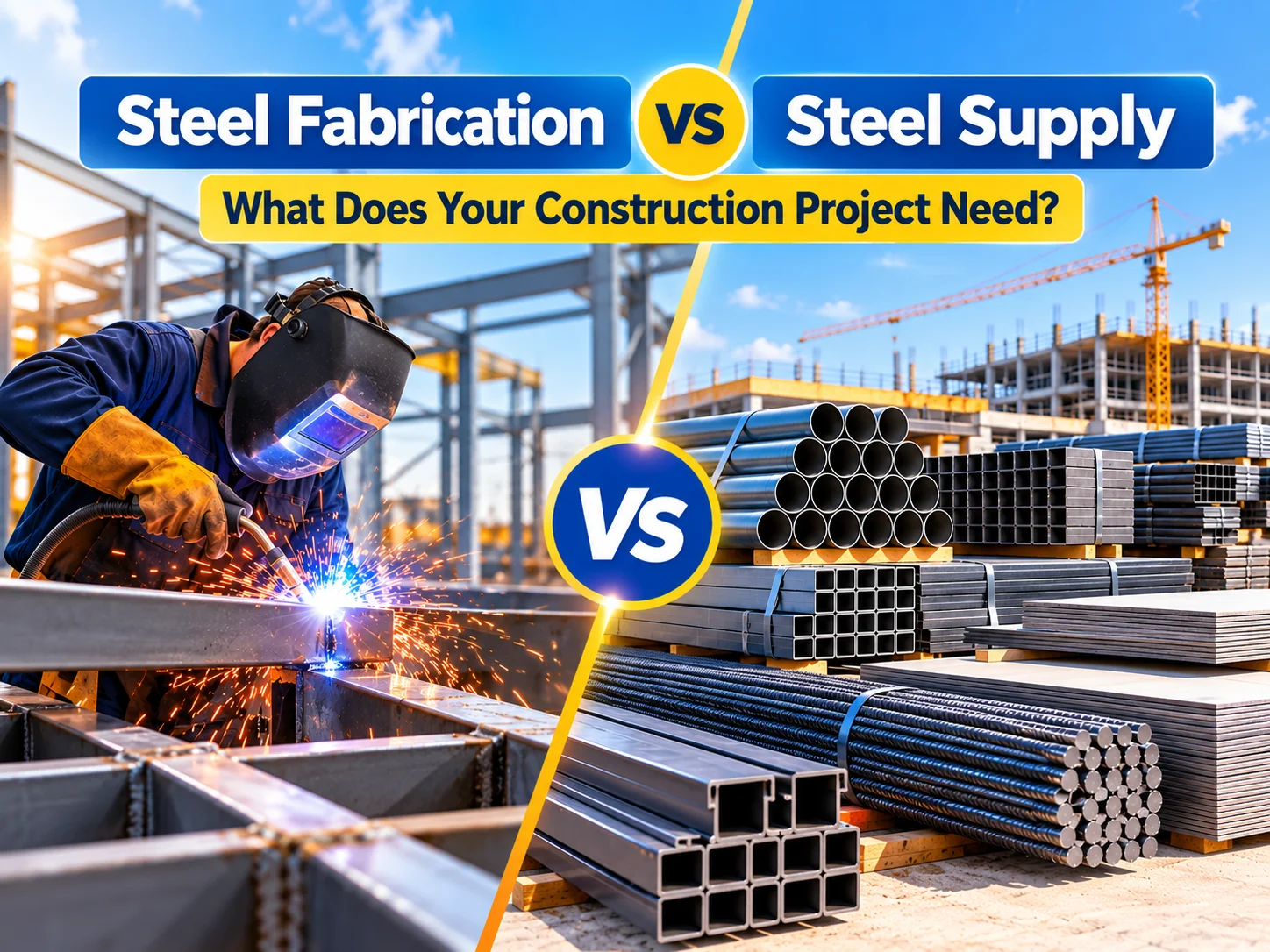
Steel Fabrication vs Steel Supply: What Does Your Construction Project Need?
Every construction project needs the right steel materials, reliable suppliers and proper planning. However, purchasing steel and transforming it into usable components are two different processes. Understanding steel fabrication vs steel supply can help you choose the right service, manage your budget and keep your project on schedule.
For example, a contractor constructing a commercial building may need steel beams, channels and angles. Meanwhile, an industrial shed project may require custom-fabricated frames, columns and structural supports.
So, which option does your project need: steel supply, steel fabrication or both?
In this guide, we explain the key differences, costs, benefits and applications of each service. We also share practical tips to help you select the right steel partner for your construction or industrial project.
What Is Steel Supply?
Steel supply involves sourcing and delivering steel materials for construction, fabrication, manufacturing and industrial applications. A steel supplier helps customers obtain the required products, quantities and specifications for their projects.
Common steel products include:
- Structural steel beams and columns
- MS channels and angles
- Structural steel pipes and hollow sections
- Mild steel plates and flat bars
- Steel rods and other construction materials
- Roofing sheets and metal decking products
Steel supply is ideal when you need raw materials or standard steel sections for further processing or installation.
For instance, a construction contractor may purchase steel beams and channels according to approved structural drawings. Similarly, a fabrication workshop may source MS plates and angles before cutting and assembling them into finished components.
When Do You Need Steel Supply?
Steel supply may be the right choice for your project if:
- You already have an in-house fabrication team.
- Your contractor handles cutting, welding and assembly.
- You require standard steel sections in specific sizes.
- Your project involves bulk steel procurement.
- You have established relationships with fabrication vendors.
However, selecting the correct materials is essential. Before placing an order, confirm the steel grade, dimensions, thickness, quantity and applicable standards.
You should also check material availability, transportation arrangements and delivery schedules to avoid unnecessary delays.
Explore Namdev Infratech’s structural steel products to learn more about steel materials for construction and industrial applications.
What Is Steel Fabrication?
Steel fabrication transforms raw or semi-finished steel into components designed for a specific application. Depending on the project, the process may involve cutting, drilling, bending, welding, assembly and finishing.
In simple terms, steel supply provides the material, while steel fabrication converts that material into project-specific components.
Steel fabrication supports a wide range of applications, including:
- Industrial sheds and warehouse structures
- Steel staircases, railings and gates
- Structural supports and brackets
- Mezzanine floors and steel frameworks
- Metal partitions and architectural facades
- Decorative metal panels and jali designs
- Custom steel components manufactured to technical drawings
For example, constructing a warehouse requires more than purchasing steel beams and columns. The project may also need components cut and fabricated to match the approved structural design.
Professional fabrication helps prepare these components for installation. However, structural design, load calculations and installation must follow the approved engineering drawings and applicable safety requirements.
When Do You Need Steel Fabrication?
Steel fabrication may suit your project if:
- You require customised shapes or dimensions.
- Your project involves components manufactured to technical drawings.
- You need cutting, drilling, bending, welding or assembly.
- You are constructing an industrial shed or warehouse.
- Your design includes architectural metalwork.
- You want to coordinate material procurement and fabrication through one provider.
Steel Fabrication vs Steel Supply: Key Differences
Although both services support construction projects, they address different requirements. Steel supply focuses on providing materials, whereas steel fabrication focuses on processing those materials into usable components.
The exact scope depends on the service provider. Some steel suppliers also offer cutting services, while some fabrication companies source and supply the materials they process.
Therefore, check the quotation carefully to understand which services the provider includes.Steel Supply vs Steel Fabrication: Which Is More Cost-Effective?
The most cost-effective option depends on your project requirements, labour arrangements, material specifications and delivery schedule. Neither service is automatically cheaper in every situation.
1. Steel Material Costs
With steel supply, the quotation generally covers the steel products, their specifications, quantities and delivery requirements.
When comparing quotations, ensure that each supplier quotes the same steel grade, section size, thickness and quantity. Otherwise, a lower price may reflect a different specification rather than better value.
Additionally, check whether transportation, handling and applicable taxes appear separately in the quotation.
2. Steel Fabrication Costs
Fabrication adds processing and labour costs to the material price. These costs may include cutting, drilling, bending, welding, assembly and finishing.
The final price depends on several factors, including:
- Complexity of the design
- Type and thickness of steel
- Number of components
- Cutting and welding requirements
- Finishing specifications
- Production quantity and delivery schedule
However, accurate fabrication can reduce avoidable errors and on-site adjustments when the team follows approved drawings and quality checks.
3. Labour and Equipment Costs
If your company already has skilled workers, suitable machinery and workshop space, purchasing steel separately may be practical.
On the other hand, outsourcing fabrication may be more convenient if you need to hire workers, rent equipment or arrange a separate workshop.
Before deciding, compare the cost of in-house fabrication with the complete outsourced quotation.
4. Transportation and Coordination Costs
Purchasing materials from one vendor and arranging fabrication through another can involve additional transportation, handling and communication.
For example, your team may need to move steel from the supplier’s warehouse to a fabrication workshop and then transport the finished components to the construction site.
A provider that offers both steel supply and fabrication may simplify these arrangements. Nevertheless, confirm the delivery scope and compare the actual costs before making a decision.
5. Material Wastage and Rework
Accurate cutting plans and fabrication drawings help teams use steel efficiently. In contrast, incorrect measurements or poor coordination can result in offcuts, rework and additional expenses.
Discuss cutting allowances, material wastage, inspection procedures and responsibility for rework before approving the order.
The key takeaway: Compare the total project cost rather than the steel price alone. Include materials, processing, labour, transportation, installation preparation and any additional services.
Which Option Should You Choose for Your Construction Project?
Your project scope should determine whether you need steel supply, fabrication or both. Consider the following examples before selecting a service.
Scenario 1: You Need Steel for a Building
If you already have approved drawings and a team that can handle fabrication, steel supply may be sufficient.
You can purchase the required beams, channels, angles and plates according to the specifications. Your contractor or fabrication team can then process the materials as needed.
In this situation, reliable material sourcing and timely delivery are important considerations.
Scenario 2: You Need Custom Steel Components
If your project requires customised frames, supports, staircases or metal partitions, fabrication may be the better option.
A fabricator can process steel according to approved dimensions and technical drawings. As a result, you can obtain components that match the project’s requirements more closely.
Before proceeding, confirm the fabrication scope, tolerances, finishing requirements and inspection procedures.
Scenario 3: You Are Constructing an Industrial Shed or Warehouse
Industrial sheds and warehouses often require both steel supply and fabrication.
The project may need structural sections, fabricated columns, roof trusses, supports and connecting components. Therefore, coordinating procurement and fabrication can simplify planning.
However, the final requirements depend on the structural design, engineering calculations, site conditions and applicable standards.
Scenario 4: You Need Architectural Metalwork
Decorative screens, facade panels, metal jali designs and custom architectural components may require specialised cutting and finishing.
In this case, assess the provider’s equipment, dimensional accuracy, finishing options and experience with similar projects.
You should also share the design files or technical drawings before requesting a quotation.
Why Choose a Company That Offers Both Steel Supply and Fabrication?
Managing steel procurement and fabrication through separate vendors can work well when you have an established supply chain. However, it may also increase coordination requirements.
A company that offers both services can help streamline several stages of the project.
1. Simplified Procurement
You can discuss material requirements and fabrication needs with one team. Consequently, you may spend less time coordinating separate quotations, purchase orders and delivery arrangements.
2. Better Material Coordination
When the supply and fabrication teams coordinate their work, they can align material specifications with cutting lists and fabrication drawings.
This approach can help reduce discrepancies between the materials ordered and the components required.
3. More Efficient Project Planning
Coordinating material availability, fabrication schedules and delivery dates helps construction teams plan their next steps.
However, actual timelines still depend on design approvals, material availability, production capacity and site readiness.
4. Clearer Cost Estimates
A combined quotation can make it easier to understand material costs and fabrication charges. You can then compare the total cost with separate supplier and fabricator quotations.
For better transparency, ask the provider to identify material costs, processing charges, finishing, transportation and taxes separately.
5. One Point of Coordination
Instead of independently managing every material and fabrication requirement, you can coordinate the main requirements through one provider.
This arrangement can be especially useful for industrial projects that involve multiple steel sections and fabricated components.
Namdev Infratech offers steel supply and fabrication-related services for construction, industrial and architectural applications in Bangalore. Customers can discuss their material requirements and explore suitable services based on their project scope.
Explore Namdev Infratech’s steel products or learn more about its structural fabrication services
What Should You Check Before Choosing a Steel Supplier or Fabricator?
Choosing the right service provider can help you manage quality, cost and delivery expectations. Before finalising a vendor, review these important factors.
Material Specifications
Confirm the steel grade, section dimensions, thickness, quantity and applicable standards. Also, request relevant material documentation when your project requires it.
Technical Drawings
Provide approved drawings, cutting lists and fabrication details wherever applicable. Clear specifications help the supplier or fabricator understand the scope.
Processing Capabilities
Check whether the provider can handle your cutting, drilling, bending, welding and finishing requirements. If your project involves complex components, clarify the available equipment and production capacity.
Quality Checks
Discuss dimensional inspections, material verification, welding quality requirements and fabrication tolerances. For structural applications, ensure the work follows approved engineering specifications.
Pricing Transparency
Request an itemised quotation that explains material costs, processing charges, finishing, transportation and applicable taxes.
This makes it easier to compare providers and identify additional costs before work begins.
Delivery Schedule
Confirm material availability, fabrication lead times and transportation arrangements. Moreover, discuss how the provider will handle design changes or unexpected material delays.
Relevant Project Experience
Review previous work examples and assess whether the provider can handle your project’s scale and requirements.
Communication and Support
Choose a provider who can clarify technical requirements, explain the quotation and communicate changes promptly.
For structural projects, involve a qualified structural engineer in material selection, design approval and load-bearing requirements.
Why Consider Namdev Infratech for Steel Supply and Fabrication in Bangalore?
Namdev Infratech supports construction, industrial and architectural projects with steel supply and fabrication-related services in Bangalore.
Founded in 2003, the company has developed its steel business to serve customers who require construction materials and fabrication solutions.
Its service offerings include:
- Structural steel supply: Steel beams, channels, angles, pipes and plates for construction and industrial applications.
- Structural fabrication: Steel fabrication work for industrial sheds, warehouses and structural frameworks.
- General fabrication: Custom steelwork for applications such as gates, railings, supports and other components, depending on the project scope.
- Laser cutting: Precision cutting for suitable metal components, architectural panels and decorative designs.
- HR plate cutting: Cutting hot-rolled steel plates to meet specified dimensions and project requirements.
By offering multiple services, Namdev Infratech can help customers coordinate their steel requirements with a single team.
Whether you are a contractor sourcing bulk steel or a business looking for custom-fabricated components, start by discussing your drawings, specifications, quantities and delivery requirements.
Explore Namdev Infratech’s steel products or view its project portfolio to learn more about its work.
Frequently Asked Questions
1. What is the difference between steel fabrication and steel supply?
Steel supply involves sourcing and delivering steel materials such as beams, channels, angles and plates. Steel fabrication involves processing those materials through cutting, drilling, bending, welding or assembly to create components for a specific application.
2. Is steel fabrication more expensive than buying steel?
Steel fabrication generally adds processing and labour costs to the material price. However, the overall cost depends on the design, quantity, complexity, equipment requirements and transportation. Compare the complete project cost before choosing an option.
3. Can I buy steel and get it fabricated by the same company?
Yes. Some companies offer both steel supply and fabrication services. This arrangement can simplify material procurement and coordination. However, confirm the provider’s capabilities and the exact services included in the quotation.
4. Which service is better for industrial shed construction?
Industrial shed projects often require both structural steel supply and fabrication. The supplier provides the specified materials, while the fabrication team prepares components according to approved drawings. Your project’s engineering requirements and execution plan will determine the exact scope.
5. What information should I provide when requesting a steel fabrication quotation?
Provide project drawings, dimensions, steel grade, material thickness, quantity, finishing requirements and delivery location. If you do not have complete drawings, explain the intended application and ask the provider which additional details it needs.
6. Does Namdev Infratech provide steel supply and fabrication in Bangalore?
Yes. Namdev Infratech supplies structural steel and offers fabrication-related services, including structural fabrication, general fabrication, laser cutting and HR plate cutting. Contact the team to discuss your project requirements and confirm the scope of work.
Visit the Namdev Infratech contact page to make an enquiry.
Choose the Right Steel Solution for Your Project
Steel supply and steel fabrication serve different purposes, but many construction projects need both. Steel supply provides the materials, while fabrication prepares them for their intended use.
Therefore, assess your project drawings, technical specifications, budget, labour arrangements and delivery schedule before choosing a service.
If you require both materials and customised components, working with a provider that offers integrated services may simplify procurement and coordination.
Planning a construction or fabrication project in Bangalore?
Contact Namdev Infratech to discuss your steel requirements, fabrication drawings and project specifications.
Get started: Contact Namdev Infratech to enquire about steel supply and fabrication services.