
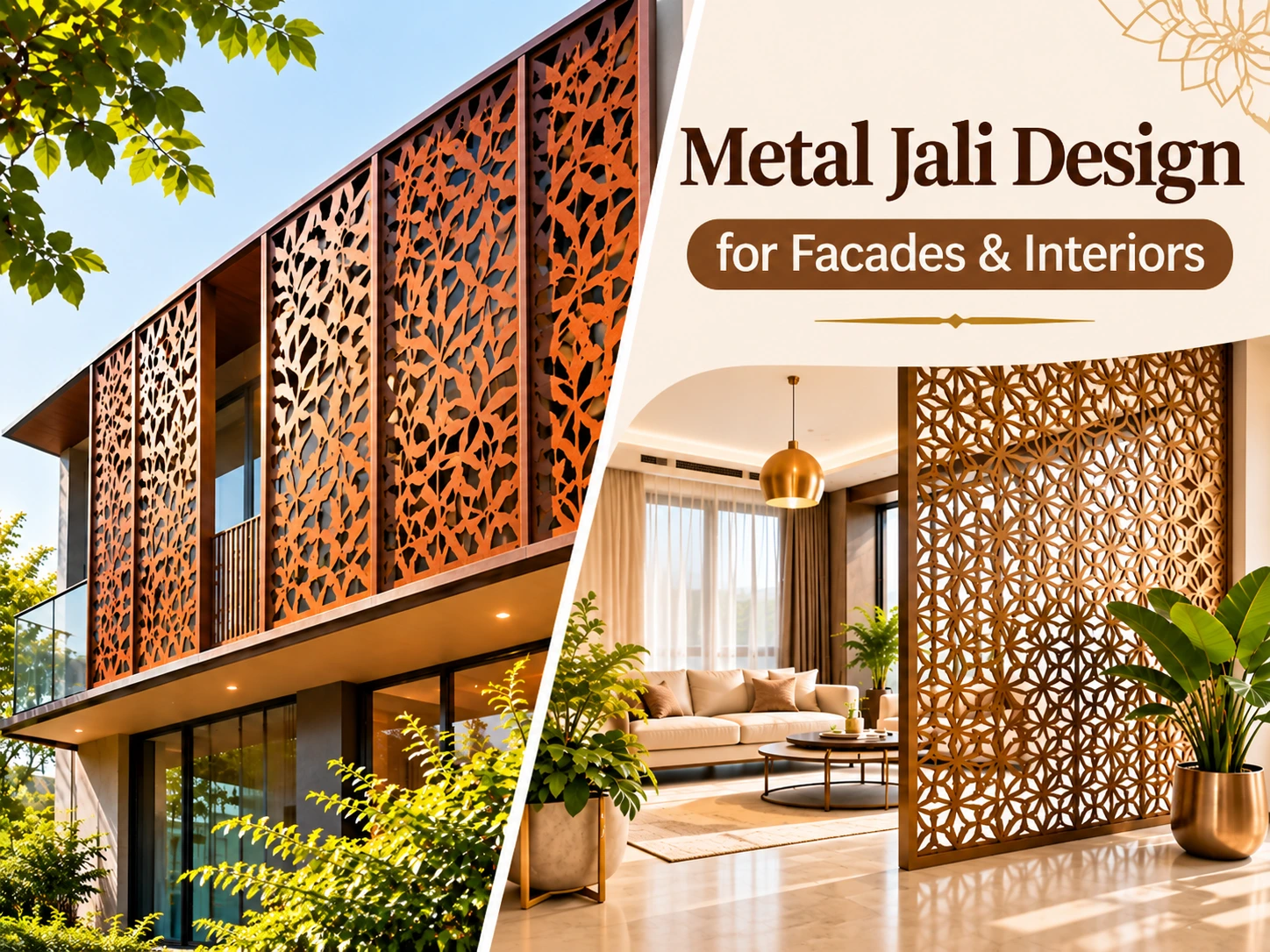
Metal Jali Design for Facades & Interiors: Materials, Patterns & Applications
Looking for the right metal jali design for facades and interiors? Metal jali panels have become an important part of modern architecture because they combine decorative appeal with practical functionality. From building elevations and balcony screens to office partitions and decorative wall panels, these products offer several design possibilities.
Today, architects, interior designers and fabricators use laser-cut metal sheets, perforated panels and metal mesh to create customised architectural elements. Moreover, different patterns, opening sizes and finishes allow designers to match metal jali panels with contemporary as well as traditional spaces.
Namdev Infratech supplies a range of jali products in Bangalore, including laser-cut sheets, perforation sheets, GI weld mesh, weld mesh and chain link mesh. In addition, the company offers laser cutting and elevation and facade fabrication services for suitable project requirements.
Quick answer: Metal jali design refers to decorative or functional metal panels featuring cut-outs, perforations or mesh openings. These panels are commonly used for building facades, balcony screens, interior partitions, window coverings and industrial enclosures. Popular options include laser-cut sheets, perforated metal sheets and GI weld mesh. Before selecting a design, consider the material, pattern, opening size, sheet thickness, finish and installation requirements.
Table of Contents
- What Is Metal Jali Design?
- Materials Used for Metal Jali Panels
- Popular Metal Jali Patterns for Modern Architecture
- Applications of Metal Jali in Facades and Interiors
- Types of Metal Jali Products
- Laser-Cut Jali vs Perforated Metal Sheets
- How to Choose the Right Metal Jali Design
- Metal Jali for Building Elevations and Facades
- How to Choose Metal Jali Suppliers in Bangalore
- Factors That Affect Metal Jali Prices
- Metal Jali Products and Fabrication at Namdev Infratech
- What to Share When Requesting a Metal Jali Quotation
- Frequently Asked Questions
What Is Metal Jali Design?
Metal jali design refers to metal sheets or panels featuring decorative cut-outs, perforations or mesh patterns. Manufacturers produce these panels using different fabrication techniques, depending on the required design, material and application.
Unlike solid metal sheets, jali panels contain openings that allow varying levels of natural light, airflow and visibility. Therefore, architects and designers use them to create functional screens without completely enclosing a space.
Furthermore, modern laser cutting technology allows manufacturers to create customised patterns with precise shapes and detailed designs. As a result, metal jali has become a popular choice for both architectural exteriors and contemporary interiors.
Key Features of Metal Jali Panels
- Decorative appearance: Different patterns add visual interest to building elevations, walls and interior spaces.
- Ventilation: Openings allow air to pass through, depending on the pattern and open area.
- Natural lighting: Jali panels allow varying amounts of daylight into selected spaces.
- Privacy and screening: Suitable patterns can partially screen balconies, windows and open areas.
- Design flexibility: Laser cutting supports customised patterns, shapes and dimensions.
- Multiple applications: Metal jali products work across residential, commercial and industrial projects.
However, the right jali panel depends on its intended use. Therefore, consider the required strength, opening size, material and installation method before selecting a product.
Explore metal jali products from Namdev Infratech for different architectural and industrial requirements.
Materials Used for Metal Jali Panels
Material selection plays an important role in the appearance, durability and performance of metal jali panels. Different metals offer different characteristics. Therefore, the right choice depends on the installation location, design requirements, environmental exposure and budget.
1. Mild Steel (MS) Jali
Mild steel is a commonly used material for architectural and general fabrication applications. It offers good fabrication flexibility and supports different cutting and finishing requirements.
Moreover, MS sheets can accommodate customised geometric, floral and decorative patterns through suitable cutting processes.
Common applications:
- Building facade screens
- Decorative wall panels
- Interior partitions
- Entrance gates
- Custom architectural metalwork
2. Stainless Steel Jali
Stainless steel offers a clean metallic appearance and good corrosion resistance. Consequently, it is a suitable option for projects that require an attractive finish and resistance to environmental exposure.
Common applications:
- Modern office interiors
- Commercial partitions
- Decorative wall screens
- Premium architectural elements
- Entrance and reception areas
3. Galvanised Iron (GI) Jali
GI jali products feature a zinc coating that helps protect the underlying steel from corrosion. Depending on the product type, they can support screening, ventilation, fencing and protective applications.
Common applications:
- Industrial enclosures
- Ventilation screens
- Protective barriers
- Boundary fencing
- Industrial screening
4. Aluminium Jali
Aluminium is lightweight and offers natural corrosion resistance. Therefore, designers may consider it for architectural applications where panel weight and surface finish are important factors.
Common applications:
- Window screens
- Lightweight facade panels
- Decorative partitions
- Ceiling features
- Balcony screens
Ultimately, the best material depends on the project's technical requirements. In addition, confirm the material specification, thickness and suitable protective finish before fabrication.
Popular Metal Jali Patterns for Modern Architecture
The pattern determines the visual character of a metal jali panel. It also influences the amount of light, airflow and visibility through the openings. Therefore, architects should select patterns according to the intended application and overall design theme.
1. Geometric Jali Patterns
Geometric metal jali designs feature squares, rectangles, diamonds, triangles and hexagonal shapes. These patterns create a structured and contemporary appearance. Moreover, they work well with modern building elevations, office partitions and commercial interiors.
2. Floral Jali Patterns
Floral patterns use decorative shapes inspired by flowers, leaves and natural elements. They add visual detail to otherwise plain surfaces. Consequently, designers often use them for feature walls, entrance screens and decorative partitions.
3. Laser-Cut Custom Patterns
Laser-cut jali panels support customised shapes and intricate designs. From simple repeating motifs to detailed architectural patterns, laser cutting offers flexibility for project-specific requirements.
4. Round and Square Perforation Patterns
Perforated metal sheets feature regularly arranged holes in different shapes and sizes. Round and square perforations are common options for ventilation panels, industrial screening and decorative applications.
5. Hexagonal Jali Patterns
Hexagonal patterns create a honeycomb-inspired appearance. Their repeating arrangement gives panels a distinctive geometric character, making them suitable for contemporary facades and interior screens.
6. Traditional Decorative Patterns
Traditional jali patterns feature symmetrical motifs and detailed cut-outs. Modern laser cutting also allows designers to reinterpret these patterns for contemporary residential and commercial spaces.
In addition to standard designs, customised patterns can match a project's architectural theme, brand identity or interior concept. For this reason, architects often share reference images or digital drawings before starting fabrication.
Explore Namdev Infratech's fabrication and creative projects for examples of architectural metalwork and laser-cut jali applications.
Applications of Metal Jali in Facades and Interiors
Metal jali panels serve decorative and functional purposes across residential, commercial and industrial spaces. Their design flexibility makes them suitable for several architectural applications.
1. Building Facades
Metal jali facade panels add texture, depth and visual appeal to building elevations. Furthermore, appropriately designed screens can provide partial shading and help manage direct sunlight.
2. Balcony Screens
Metal jali screens provide partial privacy while maintaining airflow and visibility. In addition, customised patterns can complement the building's exterior design.
3. Interior Partitions
Decorative metal partitions divide spaces without creating completely enclosed rooms. For example, designers use them between living and dining areas, office workstations and reception spaces.
4. Window Screens
Metal jali window screens combine decorative detailing with partial screening. Depending on the pattern, they can allow natural light and ventilation while limiting direct visibility.
5. Staircase Railings
Jali panels can serve as decorative infill sections in staircase railings. However, the panel thickness, fixing arrangement and opening dimensions must meet the applicable safety requirements.
6. Commercial Interiors
Offices, hotels, restaurants and retail showrooms use metal jali for reception backdrops, decorative walls and display partitions. As a result, businesses can create distinctive interior spaces.
7. Gates and Entrance Panels
Decorative metal jali can enhance entrance gates and boundary designs. Additionally, customised patterns help create a consistent architectural appearance.
8. Industrial Screening
Perforated sheets and metal mesh support industrial applications such as ventilation enclosures, protective screens and equipment guards. The selected product should suit the required operating conditions.
Besides these applications, metal jali panels can serve as decorative ceiling elements, service-area screens and architectural dividers. Therefore, their application depends on the required design, material and functional performance.
For customised architectural applications, explore elevation and facade fabrication in Bangalore.
Types of Metal Jali Products
Metal jali products are available in different forms, depending on their manufacturing method and intended application. Understanding these options helps buyers select suitable products for architectural, decorative and industrial projects.
1. Laser Cut Sheets
Laser-cut sheets feature patterns created using precision laser cutting technology. They support customised designs, including geometric shapes, decorative motifs and project-specific cut-outs.
Architects and fabricators commonly use them for facade screens, decorative partitions, wall panels and architectural metalwork.
2. Perforation Sheets
Perforated metal sheets contain regularly arranged openings in different shapes and sizes. Common patterns include round, square and slotted holes.
Moreover, their open structure makes them suitable for ventilation panels, protective screens, industrial enclosures and architectural facades.
3. GI Weld Mesh
GI weld mesh consists of intersecting metal wires joined through welding and protected with a galvanised coating. It offers a practical option for fencing, protective barriers and industrial screening.
4. Weld Mesh
Weld mesh features a grid-like arrangement of welded metal wires. Depending on its wire diameter and mesh opening, it can serve fencing, partitions, protective enclosures and general industrial applications.
5. Chain Link Mesh
Chain link mesh features an interwoven wire pattern that creates a flexible mesh structure. It is commonly used for boundary fencing, industrial sites, construction areas and other screening applications.
Therefore, select the product according to its intended use rather than treating all jali and mesh products as interchangeable.
Explore the complete range of jali products at Namdev Infratech.
Laser-Cut Jali vs Perforated Metal Sheets: What Is the Difference?
Laser-cut jali and perforated metal sheets both feature openings in metal panels. However, their pattern creation methods and typical design applications can differ. Therefore, understanding these differences helps architects and buyers select the right product.
| Comparison | Laser-Cut Jali | Perforated Metal Sheets |
|---|---|---|
| Design | Custom shapes and decorative cut-outs | Regularly arranged perforations |
| Patterns | Geometric, floral and customised motifs | Round, square, slotted and other hole patterns |
| Appearance | Decorative and architectural | Functional and decorative |
| Design flexibility | Suitable for intricate custom patterns | Depends on the available perforation pattern and specifications |
| Applications | Facades, partitions, decorative walls and entrance panels | Ventilation, screening, enclosures and facades |
| Selection priority | Custom design and visual appearance | Opening arrangement and functional requirements |
In general, laser-cut jali works well when a project requires customised decorative patterns. On the other hand, perforated sheets are a practical choice for applications that require consistent hole arrangements.
However, the final selection should also consider material thickness, opening size, strength, fabrication requirements and installation conditions.
Explore laser cutting services in Bangalore for customised metal cutting requirements.
How to Choose the Right Metal Jali Design for Your Project
Selecting the right metal jali involves more than choosing an attractive pattern. Material, panel dimensions, opening size and installation requirements also influence the final result. Therefore, review these factors before placing an order.
1. Identify the Application
First, determine whether you need metal jali for a building facade, balcony, window, interior partition, railing or industrial enclosure. Each application has different design and performance requirements.
2. Choose the Suitable Material
Next, consider the required strength, weight, corrosion resistance and finish. The installation environment also matters, particularly for panels exposed to rain and other outdoor conditions.
3. Select the Right Pattern
Choose a design that complements the building or interior theme. For example, geometric patterns suit contemporary architecture, while floral and traditional motifs add decorative detail.
4. Consider Opening Size and Spacing
The size and spacing of openings influence airflow, daylight, privacy and visibility. Larger openings generally allow more airflow and visibility, while smaller openings provide greater screening.
5. Confirm Sheet Thickness
Panel thickness should suit the panel dimensions, support arrangement, installation method and expected loads. Therefore, discuss the technical requirements with your fabricator or project engineer.
6. Select the Appropriate Finish
Surface finish influences both appearance and maintenance. Depending on the material and installation location, options may include powder coating and other suitable protective finishes.
7. Check Fabrication Accuracy
Accurate cutting and finishing help achieve consistent panel dimensions and clean edges. Furthermore, matching the approved drawings reduces alignment and installation issues.
8. Review Installation Requirements
Finally, consider the support frame, fixing points, panel weight and site conditions. For exterior applications, the design should also account for wind loads and suitable structural connections.
By reviewing these factors early, architects, contractors and buyers can make better product decisions and avoid unnecessary changes during fabrication.
Metal Jali for Building Elevations and Facades
Building elevations play an important role in defining a property's architectural appearance. Metal jali facade panels offer an additional design element by introducing patterns, depth and texture to exterior surfaces.
Moreover, architectural screens can provide partial shading, reduce direct sunlight exposure in selected areas and maintain airflow, depending on the design and installation.
Popular Applications in Building Facades
- Front elevation screens: Add decorative detailing to residential and commercial buildings.
- Balcony facade panels: Provide partial screening and complement exterior architecture.
- Window shading screens: Help control direct sunlight while maintaining selected openings.
- Exterior feature walls: Create attractive patterns and visual depth on building surfaces.
- Commercial facade cladding: Introduce decorative metal elements into contemporary building designs.
- Ventilation screens: Support airflow through appropriately designed openings.
Important Considerations for Facade Jali Fabrication
Facade panels require proper coordination between architectural design and fabrication. Therefore, review the following requirements before production:
- Approved architectural drawings and panel dimensions.
- Material grade and sheet thickness.
- Pattern layout and opening dimensions.
- Support frames and fixing arrangements.
- Surface finish and outdoor exposure.
- Structural requirements, including applicable wind loads.
- Panel alignment and installation access.
Furthermore, early coordination between architects, fabricators and installation teams helps maintain design consistency across multiple panels.
Explore building elevation and facade fabrication services in Bangalore for architectural metalwork requirements.
How to Choose Reliable Metal Jali Suppliers in Bangalore
Bangalore has several metal product dealers and fabrication companies. However, their product ranges, cutting capabilities and fabrication support can differ. Therefore, compare suppliers based on your actual project requirements.
Consider these factors when choosing a metal jali supplier in Bangalore.
Product Range
Check whether the supplier offers laser-cut sheets, perforation sheets, GI weld mesh and other products relevant to your project.
Material Specifications
Confirm the material type, grade, thickness and dimensions before placing your order.
Custom Cutting Facilities
If you require customised patterns, check whether the supplier offers suitable laser cutting and metal processing facilities.
Fabrication Experience
Review the supplier's experience with architectural screens, facade panels, partitions and other metalwork.
Finishing Options
Discuss available surface finishes and protective treatments according to the installation environment.
Quotation Transparency
Compare material costs, cutting charges, finishing requirements, applicable taxes and delivery costs.
In addition, review previous fabrication projects to understand the supplier's design and execution capabilities. If your project involves both material supply and fabrication, a supplier offering related services can simplify coordination.
Explore fabrication services in Bangalore for architectural and industrial metalwork requirements.
Factors That Affect Metal Jali Prices in Bangalore
Metal jali prices depend on several factors, including material specifications, sheet dimensions, design complexity and fabrication requirements. Therefore, buyers should request quotations based on their actual project drawings and product specifications.
1. Material Type
The selected metal influences the overall material cost. Mild steel, stainless steel, GI and aluminium have different material characteristics and pricing.
2. Sheet Thickness
Sheet thickness affects material consumption and panel weight. Consequently, thicker sheets may increase the overall material cost.
3. Panel Dimensions
The length, width and number of panels determine the total material requirement. Custom dimensions may also influence cutting and material utilisation.
4. Design Complexity
Intricate patterns and detailed cut-outs may require additional design preparation and processing time. Therefore, customised laser-cut designs can have different processing costs from standard patterns.
5. Cutting and Fabrication
Laser cutting, edge finishing, welding and frame fabrication can add to the overall project cost. Ask the supplier to clarify the scope of each processing activity.
6. Surface Finish
Powder coating and other protective or decorative finishes can influence the final quotation. The selected finish should suit the material and installation location.
7. Order Quantity
The number of panels and total material requirement may affect pricing and production planning. For larger projects, discuss quantity and delivery arrangements with the supplier.
8. Transportation and Installation
Delivery distance, panel dimensions and site accessibility can affect transportation costs. Additionally, installation support may form a separate part of the project quotation.
Buying tip: Compare the complete project cost rather than only the price per sheet. In addition, confirm material specifications, cutting charges, finishing, delivery and installation scope before finalising the supplier.
Metal Jali Products and Fabrication at Namdev Infratech
Namdev Infratech is a steel supplier and fabrication company based in Bangalore. Since 2003, the company has supported construction, architectural, commercial and industrial requirements through its metal product range and fabrication capabilities.
For customers looking for metal jali suppliers in Bangalore, Namdev Infratech offers a range of jali products, including laser-cut sheets, perforation sheets, GI weld mesh, weld mesh and chain link mesh.
In addition, the company provides laser cutting and elevation and facade fabrication services for suitable project requirements.
Jali Products Available at Namdev Infratech
- Laser Cut Sheets: Suitable for decorative panels, customised jali patterns and architectural metalwork.
- Perforation Sheets: Suitable for ventilation panels, screening and facade applications.
- GI Weld Mesh: Used for protective screening, fencing and industrial applications.
- Weld Mesh: Suitable for partitions, enclosures and general screening requirements.
- Chain Link Mesh: Used for boundary fencing and industrial site screening.
Why Choose Namdev Infratech for Metal Jali Requirements?
- Established experience: Serving steel and fabrication requirements in Bangalore since 2003.
- Multiple jali products: Access different sheet and mesh products for architectural and industrial applications.
- Laser cutting capabilities: Discuss customised cutting requirements based on approved drawings.
- Facade fabrication: Support for decorative facade screens, metal cladding panels, louvres and structural support frames.
- Related fabrication services: Access additional metal fabrication capabilities for suitable project requirements.
- Project coordination: Share your design, dimensions and material specifications to discuss suitable product options.
Whether you are an architect planning a decorative building elevation, an interior designer sourcing metal partitions or a contractor requiring mesh products, Namdev Infratech can help you discuss suitable material and fabrication options.
Explore our products and services:
- Jali Products in Bangalore
- Laser Cutting Services in Bangalore
- Elevation and Facade Fabrication
- Fabrication Services in Bangalore
- Our Fabrication Projects
For exact product specifications, material availability and customised fabrication requirements, contact Namdev Infratech directly.
What to Share When Requesting a Metal Jali Quotation
Providing clear project details helps suppliers understand your requirements and prepare a relevant quotation. Therefore, keep the following information ready before contacting a metal jali supplier in Bangalore.
- Application: Mention whether the panels are for a facade, balcony, partition, window, gate or industrial enclosure.
- Material: Specify the required metal type, such as mild steel, stainless steel, GI or aluminium.
- Sheet Thickness: Mention the required thickness according to your project specifications.
- Panel Dimensions: Provide the length, width and number of panels required.
- Pattern: Share your preferred design, reference image or approved drawing.
- Opening Size: Mention the required perforation size, spacing or open-area requirements wherever applicable.
- Finishing: Specify powder coating or any other required surface treatment.
- Quantity: Provide the total number of sheets or panels required.
- Fabrication Details: Mention any frame fabrication, welding, cutting or additional processing requirements.
- Delivery Location: Provide the project site location and expected delivery schedule.
Additionally, attach architectural drawings, CAD files or reference photographs wherever possible. This gives the supplier a clearer understanding of the required pattern, dimensions and fabrication scope.
Conclusion
Metal jali designs offer several possibilities for modern building facades, residential interiors, commercial spaces and industrial applications. From geometric laser-cut patterns to decorative screens and perforated sheets, the right product can improve the appearance and functionality of a space.
However, choosing the right metal jali requires careful attention to material, pattern, opening size, sheet thickness, finishing and installation requirements. Furthermore, working with an experienced supplier and fabrication partner can simplify material selection and project coordination.
For customers searching for metal jali suppliers in Bangalore, Namdev Infratech offers laser-cut sheets, perforation sheets, GI weld mesh, weld mesh and chain link mesh, along with laser cutting and facade fabrication capabilities.
Share your design, dimensions and material requirements with Namdev Infratech to discuss suitable metal jali products for your next architectural or fabrication project.
Frequently Asked Questions
1. What is metal jali design used for?
Metal jali design is used for building facades, balcony screens, window coverings, interior partitions, decorative walls, entrance gates and industrial enclosures. It offers a combination of decorative appeal, ventilation and partial screening.
2. Which metal is best for jali designs?
Mild steel, stainless steel, galvanised iron and aluminium are common material options. The right choice depends on the application, required strength, weight, environmental exposure and finishing requirements.
3. What are the popular metal jali patterns?
Popular options include geometric, floral, hexagonal, traditional decorative and customised laser-cut patterns. Round and square perforation patterns are also common for functional and decorative applications.
4. What is the difference between laser-cut jali and perforated sheets?
Laser-cut jali supports customised decorative shapes and intricate patterns. In comparison, perforated metal sheets generally feature regularly arranged openings, such as round, square or slotted holes.
5. Can metal jali be used for building facades?
Yes. Metal jali panels are widely used for building elevations, decorative facade screens, balcony coverings and window shading. However, panel thickness, fixing arrangements and structural support should suit the project requirements.
6. Are metal jali panels suitable for interior partitions?
Yes. Decorative metal jali panels can divide living spaces, offices, reception areas and commercial interiors without completely blocking light and visibility.
7. Can metal jali patterns be customised?
Yes. Laser cutting supports customised patterns, dimensions and panel layouts. You can share architectural drawings, CAD files or reference images to discuss your design requirements with the fabricator.
8. What factors affect metal jali sheet prices?
Material type, sheet thickness, panel dimensions, design complexity, cutting charges, surface finishing, quantity and delivery requirements can influence the final quotation.
9. What are perforation sheets used for?
Perforation sheets are used for ventilation panels, industrial enclosures, protective screens, architectural facades and decorative applications. Their suitability depends on the hole size, spacing and material specifications.
10. What is GI weld mesh used for?
GI weld mesh is commonly used for fencing, industrial screening, protective barriers and enclosures. Its galvanised coating helps protect the underlying steel from corrosion.
11. Where can I buy metal jali sheets in Bangalore?
Namdev Infratech supplies jali products in Bangalore, including laser-cut sheets, perforation sheets, GI weld mesh, weld mesh and chain link mesh. Contact the team to discuss product specifications and current availability.
12. Does Namdev Infratech provide laser cutting services?
Yes. Namdev Infratech offers laser cutting services in Bangalore for architectural panels, jali designs, decorative screens and other custom metalwork requirements.
13. Does Namdev Infratech provide facade fabrication services?
Yes. Namdev Infratech provides elevation and facade fabrication services, including decorative facade screens, metal cladding panels, louvres and structural support frames for suitable projects.
14. How can I request a quotation for metal jali products?
Share your required material, panel dimensions, sheet thickness, design, quantity and delivery location. You can also attach drawings or reference images to help the team understand your project.
15. How can I contact Namdev Infratech for jali products?
Visit the Namdev Infratech contact page or call +91 99162 25677 to discuss your metal jali product and fabrication requirements.
Looking for Metal Jali Suppliers in Bangalore?
Need laser-cut sheets, perforation sheets or metal mesh for your facade, interior or industrial project? Share your design, material specifications and quantity requirements with Namdev Infratech.
Request a Free Quote Call +91 99162 25677