
- Namdev Infratech
- 1 Comment on Warehouse Construction in Bangalore: Cost, Timeline, and the Right Partner
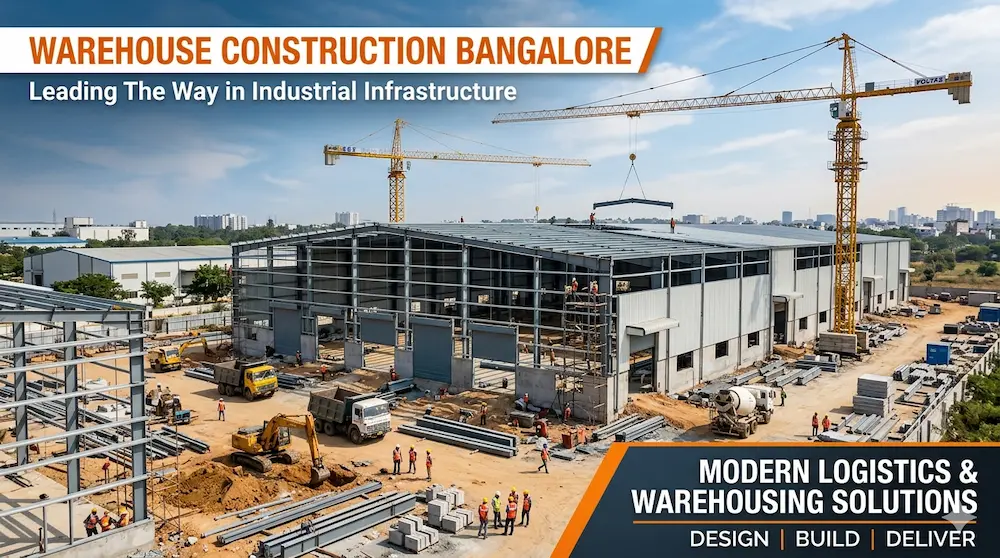
Warehouse Construction Company in Bangalore
Namdev Infratech is a warehouse construction company in Bangalore offering end-to-end solutions for industrial, commercial, logistics, storage, and distribution facilities. We provide warehouse planning, structural steel fabrication, PEB construction, roofing, cladding, and on-site execution based on the functional requirements of each project.
Whether you need a compact storage facility or a large industrial warehouse, our team can develop a practical building solution focused on strength, space utilization, durability, and efficient construction
Warehouse Construction in Bangalore
A well-designed warehouse needs more than just a large enclosed space. It must support efficient material movement, storage operations, loading and unloading, ventilation, safety, and future expansion.
As an experienced warehouse construction company in Bangalore, Namdev Infratech provides integrated construction solutions for warehouses across different industries. Our approach combines structural engineering, steel construction, roofing, cladding, and project execution to create functional warehouse buildings.
Our warehouse construction solutions can be planned around
- Warehouse size and storage capacity
- Site conditions and available space
- Material handling requirements
- Loading and unloading areas
- Storage rack configurations
- Vehicle movement and access
- Ventilation and natural lighting
- Roofing and wall cladding requirements
- Future expansion requirements
- Future expansion requirements
Industrial Warehouse Construction Services
Industrial warehouses require structures capable of handling demanding operating conditions. Therefore, the building design, structural system, roofing, flooring, and access areas need to work together.
Namdev Infratech provides industrial warehouse construction solutions for manufacturing units, distributors, logistics companies, engineering industries, and other businesses requiring dedicated storage or production space.
Our services can include
Warehouse Design and Planning
We plan the warehouse according to the site, operational requirements, storage needs, and building configuration. The objective is to create an efficient layout while making effective use of the available land.
Structural Steel Fabrication
Structural steel forms an important part of many modern warehouse buildings. We provide fabricated steel components for columns, beams, frames, supports, and other structural requirements according to the project design
PEB Warehouse Construction
Pre-engineered buildings can provide an efficient solution for warehouses where faster construction, large clear spans, and flexible layouts are important. Our PEB warehouse solutions can be designed for storage facilities, logistics centres, industrial units, distribution centres, and other commercial applications.
Roofing and Wall Cladding
We provide roofing and cladding solutions suitable for industrial and warehouse environments. Depending on the project requirements, roofing systems can be selected based on durability, weather resistance, insulation requirements, maintenance, and overall building performance.
Site Installation and Construction
After fabrication, structural components and other building elements are installed at the project site. Proper coordination between fabrication, transportation, erection, roofing, and finishing helps maintain construction efficiency
PEB Warehouse Construction in Bangalore
PEB warehouse construction is increasingly preferred for projects that require practical building systems and efficient construction schedules.
A pre-engineered warehouse generally uses factory-fabricated structural components that are assembled at the project location. This approach can reduce construction complexity and provide flexibility in warehouse planning.
PEB warehouses are suitable for:
- Logistics warehouse
- Distribution centres
- Manufacturing facilities
- Industrial storage buildings
- E-commerce warehouses
- Cold-storage buildings
- Automobile warehouses
- Engineering industry facilities
- Commercial storage facilities
The final design should be selected according to the warehouse size, span, height, loading conditions, site requirements, and intended use
Warehouse Structural Steel Solutions
Warehouse construction cost varies from project to project. There is no single fixed cost because the final
budget depends on the design, materials, site, specifications, and project requirements.
Important cost factors include:
- Steel warehouse structures
- PEB structures
- Industrial sheds
- Factory buildings
- Manufacturing buildings
- Logistics facilities
- Storage facilities
- Commercial industrial structures
Using the appropriate structural sections and fabrication methods helps create a reliable building framework while allowing the internal warehouse space to be planned according to operational requirements
Warehouse Roofing and Cladding
The roof and external envelope play an important role in protecting stored materials and maintaining suitable working conditions inside the warehouse.
We offer roofing and cladding solutions based on project requirements, including applications involving
- Colour-coated roofing sheets
- Industrial roofing sheets
- Metal roofing systems
- Wall cladding
- PEB roofing
- Industrial shed roofing
The selection of roofing material can depend on factors such as building location, roof slope, weather exposure, insulation requirements, maintenance expectations, and budget
Warehouse Design and Engineering
Effective warehouse construction starts with proper planning. Before construction begins, important
project parameters should be evaluated to develop a suitable structural and functional design.
These may include
- Site dimensions and orientation
- Soil and foundation conditions
- Required building height
- Clear span requirements
- Storage capacity
- Roofing and ventilation requirements
- Rack layout
- Crane or material-handling requirements
- Loading bay requirements
- Door and access requirements
- Future expansion plans
Types of Warehouses We Construct
Different businesses have different storage and operational requirements. Therefore, warehouse buildings can vary significantly in size, layout, structure, and specifications.
Namdev Infratech provides construction solutions for applications such as
Industrial Warehouses
Designed for manufacturing companies and industrial operations requiring storage, production, or material handling space.
Logistics Warehouses
Suitable for logistics, transportation, distribution, and supply-chain operations where efficient movement of goods is important.
Distribution Centres
Designed around the movement, sorting, storage, and dispatch of products.
PEB Warehouses
Pre-engineered warehouse structures suitable for projects requiring efficient steel construction and flexible internal layouts
Manufacturing Warehouses
Facilities combining storage and manufacturing requirements within an industrial building.
Commercial Storage Warehouses
Built for businesses requiring dedicated storage space for products, equipment, raw materials, or finished goods
Warehouse Construction Process
A systematic construction process helps improve project coordination and execution.
1. Requirement Assessment
We understand the intended use of the warehouse, approximate size, site conditions, storage requirements, and operational needs.
2. Site Evaluation
The available site is assessed to understand dimensions, access, ground conditions, and other factors that may influence the building design.
3. Design and Engineering
The structural system and building layout are developed according to the project requirements.
4. Structural Fabrication
Steel components are fabricated according to the approved design and required specifications.
5. Foundation and Civil Work
Foundation and related civil works are carried out based on the structural and site requirements.
6. Steel Erection
Fabricated structural members are transported to the site and erected to form the warehouse framework.
7. Roofing and Cladding
Roofing, wall cladding, and associated building components are installed.
8. Final Inspection and Handover
The completed structure is checked before handover to ensure the project is ready for its intended use
Factors Affecting Warehouse Construction Cost in Bangalore
Warehouse construction cost varies from project to project. There is no single fixed cost because the final budget depends on the design, materials, site, specifications, and project requirements.
Important cost factors include:
- Total built-up area
- Structural design
- Steel quantity and specifications
- Foundation requirements
- Building height
- Clear span
- Roofing material
- Wall cladding
- Flooring requirements
- Loading bay requirements
- Door and access requirements
- Insulation requirements
- Electrical and other services
- Additional equipment or structural requirements
Why Choose Namdev Infratech for Warehouse Construction?
Choosing the right warehouse construction partner can influence the efficiency, durability, and overall performance of the completed building.
Namdev Infratech provides integrated solutions covering structural steel, PEB construction, industrial sheds, roofing, and related building requirements.
Integrated Construction Solutions
We can coordinate multiple components of warehouse construction, including structural steel, PEB systems, roofing, and cladding.
Project-Specific Planning
Instead of using the same solution for every project, warehouse requirements can be evaluated based on building size, application, site conditions, and operational needs.
Industrial Construction Expertise
Our solutions are focused on industrial and commercial building requirements where structural performance, space utilization, and durability are important.
Steel Construction Capability
Our experience with structural steel and PEB systems supports the construction of large-span industrial and warehouse structures.
Practical Building Solutions
We focus on functional warehouse designs that support storage, movement, access, and future operational requirements.
Applications of Warehouse Construction
Warehouse buildings can support a wide range of commercial and industrial activities, including:
- Manufacturing
- Logistics
- E-commerce
- Distribution
- Building height
- Automobile
- Engineering
- FMCG
- Retail
- Packaging
- Industrial equipment
- Raw material storage
- Finished goods storage
Warehouse Construction in Bangalore for Growing Businesses
As businesses expand, warehouse requirements can change. A building that works for current storage needs may need additional capacity, improved material flow, or expansion space in the future.
Therefore, warehouse planning should consider not only present requirements but also potential business growth.
Namdev Infratech can develop warehouse construction solutions with factors such as future expansion, operational efficiency, structural requirements, and available site area in mind.
Frequently Asked Questions
- What does a warehouse construction company do?
A warehouse construction company plans and executes the building requirements for storage and industrial facilities. Depending on the project, services can include design, structural engineering, steel fabrication, PEB construction, roofing, cladding, erection, and related construction work. - Which type of structure is suitable for a warehouse?
The suitable structure depends on the warehouse size, span, height, usage, loading requirements, site conditions, and budget. PEB and structural steel systems are commonly considered for industrial and warehouse buildings. - Is PEB suitable for warehouse construction?
Yes. PEB systems can be suitable for many warehouse applications because they can provide large column
free spaces, flexible layouts, and efficient steel construction. The final solution should be selected according to the project’s structural and functional requirements. - How much does warehouse construction cost in Bangalore?
Warehouse construction cost depends on factors such as building area, structural design, steel quantity, foundation requirements, roofing, cladding, flooring, site conditions, and additional building services. A project-specific quotation is required for an accurate estimate. - How long does warehouse construction take?
The construction schedule depends on the building size, design complexity, foundation work, fabrication, material availability, site conditions, and scope of work. PEB construction can help streamline certain stages of the building process. - Can you construct an industrial warehouse using structural steel?
Yes. Structural steel can be used for industrial warehouses, manufacturing facilities, storage buildings, logistics facilities, and other large-span structures. - Do you provide warehouse roofing and cladding?
Yes. Roofing and wall-cladding solutions can be incorporated into warehouse and industrial building projects according to the required specifications and application - Can warehouse buildings be designed for future expansion?
Yes. Future expansion can be considered during the initial planning and structural design stage. The feasibility depends on the site, structural system, building layout, and project requirements.
Get a Warehouse Construction Quote in Bangalore
Planning a warehouse, industrial storage facility, logistics centre, or PEB warehouse in Bangalore?
Share your site details, approximate dimensions, building requirements, or project drawings with Namdev Infratech. Our team can assess the requirement and help determine a suitable warehouse construction solution.
Contact Namdev Infratech today to discuss your warehouse construction project in Bangalore
One thought on “Warehouse Construction in Bangalore: Cost, Timeline, and the Right Partner”