
- Namdev Infratech
- Leave a Comment on 2024 Global Construction Trends: Building Resilience with Structural Steel
Structural Steel Construction Trends in 2025–2026: What Every Builder Needs to Know
India’s construction industry is booming. Cities are expanding at record speed. Infrastructure budgets are at an all-time high. And structural steel sits at the heart of it all.
Steel is no longer just a commodity. Today, it is a strategic decision. Architects, developers, and contractors now choose structural steel for its speed, precision, and sustainability. As a result, structural steel construction trends in 2026 look radically different from even three years ago.
In this article, we cover the seven biggest trends shaping the industry right now. Moreover, we explain what each trend means for your project — and how Namdev Infratech supports you at every step.
Whether you are building a warehouse in Bommasandra or a commercial complex in Whitefield, these trends directly affect your next project.
1. Pre-Engineered Buildings (PEB) Continue to Dominate
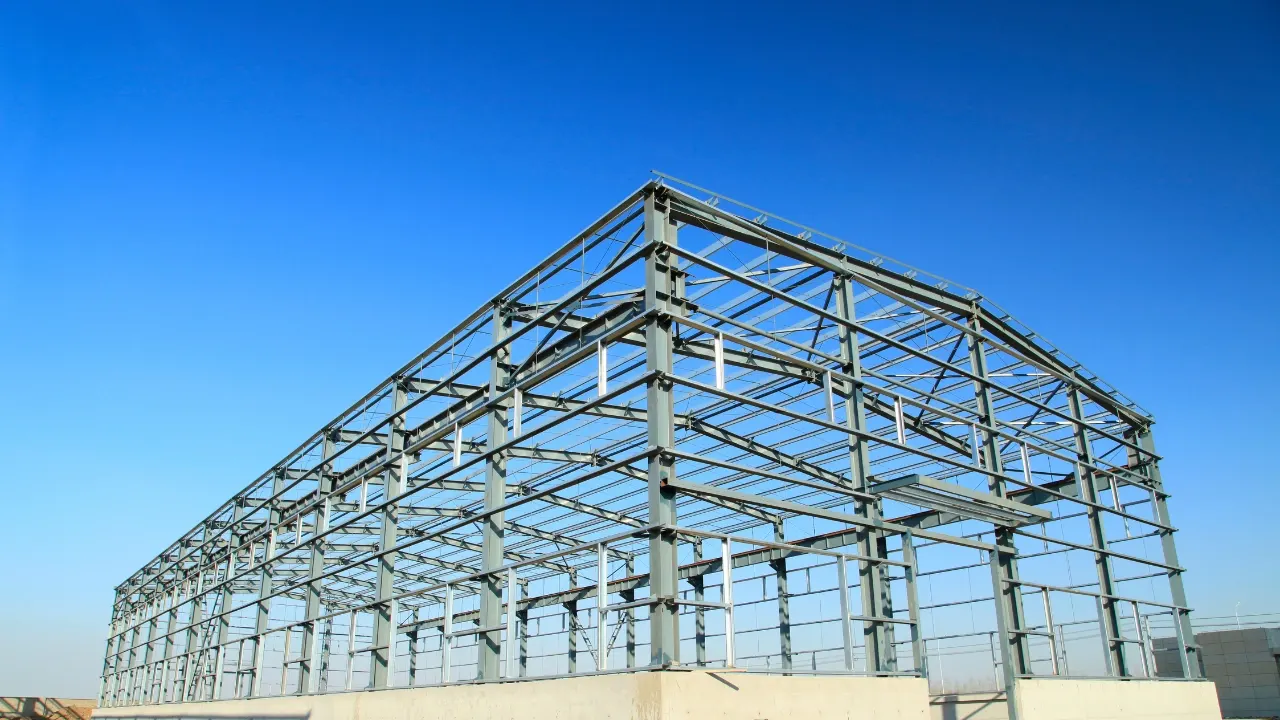
First and foremost, pre-engineered buildings are the single biggest shift in Indian construction right now. PEB structures arrive factory-manufactured and ready to assemble on site. As a result, construction timelines shrink by 30 to 50 percent compared to conventional methods.
Warehouses, factories, logistics hubs, and cold storage facilities have led this shift. Furthermore, the e-commerce explosion across Tier 1 and Tier 2 cities has created enormous demand for fast-build steel structures. Developers simply cannot wait 18 months for a warehouse to come up.
Additionally, PEBs waste far less material. Every beam and column gets precision-cut in a controlled factory setting. Consequently, on-site scrap drops to near zero — and quality stays consistent throughout.
What this means for your project:
- Faster completion — often 40 to 50 percent quicker than traditional builds
- Lower labour costs due to minimal on-site work
- Consistent quality with tighter dimensional tolerances
- Easy future expansion without structural compromise
Namdev Infratech supplies high-tensile structural steel sections ideal for PEB frames. We also provide in-house fabrication. So, you get supply and production from a single point of contact in Bangalore.
2. Green Steel and Sustainability Now Drive Procurement
Sustainability has moved from aspiration to requirement. In 2026, many government tenders and large private projects specifically mandate eco-certified materials. Therefore, specifying green steel early protects your project from compliance delays later.
Indian manufacturers like JSW Steel and Tata Steel have significantly cut their carbon footprints. They now offer green steel variants produced with cleaner energy and reduced emissions. Furthermore, LEED and IGBC certifications — both increasingly required for commercial projects — reward the use of recycled and low-emission steel.
Beyond procurement compliance, structural steel is inherently sustainable. It is 100 percent recyclable at the end of a building’s life. No quality is lost in the recycling process. Consequently, steel is the most circular structural material available in the market today.
Key sustainability facts:
- Steel buildings generate 35 to 40 percent less construction waste than concrete-heavy alternatives
- Steel frames are up to 60 percent lighter than equivalent concrete frames
- Precision fabrication eliminates material wastage at source
- Faster builds mean lower fuel consumption and site energy use
At Namdev Infratech, we stock JSW, Tata, Jindal, and SAIL steel — all from certified supply partners. So, you can source confidently for green-rated and LEED-targeted projects.
3. BIM-to-Fabrication Workflows Are Now Standard
Building Information Modelling — BIM — has permanently changed how structural steel projects run. Engineers now model entire steel frames digitally before a single cut is made. As a result, clashes, dimensional errors, and on-site surprises reduce dramatically.
Moreover, BIM models now connect directly to CNC cutting machines and fabrication equipment. This means design data flows straight from the engineer’s screen to the workshop floor. Consequently, finished components fit together perfectly when they arrive on site.
In 2026, BIM-to-fabrication is standard practice for commercial, industrial, and infrastructure projects across India. Contractors who skip this step often face costly rework and schedule overruns at the assembly stage.
How digital fabrication improves your outcomes:
- Exact material quantities reduce procurement waste and over-ordering
- CNC cutting ensures accuracy at every joint and connection point
- On-site assembly time reduces by up to 40 percent
- Full digital documentation speeds up structural approval processes
Namdev Infratech supports BIM-ready projects. Our in-house laser cutting and HR plate cutting services integrate smoothly with digital fabrication inputs. Simply share your drawings — and we will take it from there.
4. High-Strength Steel Enables Slimmer, Taller Structures
Floor space and building height are always at a premium. Architects and developers constantly look for ways to maximise usable area. High-strength steel solves this challenge directly.
Modern high-strength steel grades allow significantly thinner columns and beams. Therefore, you gain more interior space without compromising structural performance. This trend is most visible in commercial towers, multi-level car parks, and high-rise residential buildings across Bangalore and Mumbai.
Furthermore, slimmer sections mean lighter structures overall. Lighter structures need smaller foundations. Consequently, foundation costs fall — and construction timelines shorten further.
A move from standard Fe415 sections to high-strength structural steel can reduce member sizes by 20 to 30 percent, directly freeing up valuable floor area.
Namdev Infratech stocks I-beams, H-beams, channels, angles, and plates across a wide range of grades and dimensions. Our team helps you identify the right grade for your load specifications. In addition, we cut and fabricate so you receive ready-to-install components.
5. Modular and Offsite Construction Is Accelerating
Speed is everything in 2026. Modular steel construction delivers exactly that. Builders fabricate large structural sections offsite in a workshop environment. Then, they transport and erect those modules rapidly on site.
This approach is growing fast across India. Hospitals, schools, data centres, student hostels, and even mid-rise residential blocks now get built modularly. As a result, projects that once took 18 months complete in 9 — sometimes less.
Moreover, modular construction dramatically improves worker safety. Most labour happens at ground level inside a factory. Consequently, risks associated with working at height reduce significantly — which also lowers liability for contractors.
Industries driving modular steel adoption in India:
- Warehousing and logistics — rapid deployment for e-commerce and cold chain hubs
- Healthcare — fast-track hospital and primary health centre builds
- Education — school buildings with predictable quality and delivery
- Data centres — secure, scalable, steel-framed infrastructure
- Hospitality — modular guestrooms, service corridors, and kitchen blocks
Our structural fabrication team at Namdev Infratech produces mezzanine floors, staircase systems, industrial shed frames, and full modular steel assemblies. We serve contractors and developers across Bangalore and Karnataka.
6. Advanced Coatings and Corrosion Protection
Steel must last. Especially in India’s coastal, monsoon, and humid interior climates, corrosion is a real risk. Fortunately, coating technology has advanced significantly and now offers far stronger protection than before.
Today’s smart coatings feature self-healing properties. Micro-capsules embedded in the paint layer release corrosion inhibitors when the surface gets scratched. As a result, the underlying steel stays protected even after impact damage — without any maintenance intervention.
Additionally, intumescent fire-protective coatings are now far thinner and more effective. These thin layers expand rapidly under heat exposure. Therefore, they buy critical extra minutes for building evacuation and firefighting — without adding noticeable bulk to the structure.
Hot-dip galvanising technology has also improved. Modern galvanised coatings deliver zinc protection that resists corrosion for 50 years or more in standard environments. Consequently, lifetime maintenance costs drop substantially.
Coating options by environment:
- Warehousing and logistics — rapid deployment for e-commerce and cold chain hubs
- Healthcare — fast-track hospital and primary health centre builds
- Education — school buildings with predictable quality and delivery
- Data centres — secure, scalable, steel-framed infrastructure
- Hospitality — modular guestrooms, service corridors, and kitchen blocks
Our structural fabrication team at Namdev Infratech produces mezzanine floors, staircase systems, industrial shed frames, and full modular steel assemblies. We serve contractors and developers across Bangalore and Karnataka.
7. Steel in Mixed-Use Urban Development
India’s city centres are transforming. Mixed-use development — combining retail, office, and residential uses in a single building — is now the dominant model for urban real estate in Bangalore, Hyderabad, and Pune.
Steel makes mixed-use development viable. It allows large column-free spans on commercial floors below, while efficiently supporting lighter residential floors above. Furthermore, steel’s inherent flexibility lets architects create dramatic cantilevers, open facades, and unconventional floor plans that concrete simply cannot match.
In Bangalore specifically, mixed-use projects in Whitefield, Hebbal, Sarjapur Road, and Electronic City rely heavily on structural steel supply and fabrication. Contractors here need a reliable local supplier who understands project timelines and can deliver without delay. That is exactly what Namdev Infratech has delivered since 2003.
Why Namdev Infratech Is the Right Partner for 2026
Understanding trends is one thing. Acting on them quickly and correctly is another. Namdev Infratech bridges that gap for contractors, architects, and developers across Bangalore.
20+ Years of Expertise. We have been in structural steel since 2003. Our team understands materials, grades, specifications, and applications in depth. So, you get advice that saves time and avoids costly mistakes.
Premium Brands Only. We stock JSW, Tata, Jindal, and SAIL steel exclusively. Every product meets certified quality standards. As a result, your structures perform exactly as your engineer has specified.
In-House Fabrication. Laser cutting, HR plate cutting, and structural fabrication all happen under one roof. Therefore, you do not coordinate across multiple vendors — we handle it all.
End-to-End Service. From enquiry to delivery, we stay involved. Consequently, coordination stays simple and your project stays on schedule.
400+ Tonnes Per Month. Our supply volume reflects deep supplier relationships and dependable logistics. In short, we deliver when you need it — not when it is convenient for us.
Frequently Asked Questions
Q1: What is the biggest structural steel construction trend in India in 2026?
Pre-engineered buildings lead the way. PEB construction cuts timelines by 30 to 50 percent and reduces labour costs significantly. As a result, warehouses, factories, and logistics facilities across India now prefer PEB over traditional construction.
Q2: Is structural steel eco-friendly in 2026?
Yes — more than ever. Structural steel is 100 percent recyclable with no quality loss. Furthermore, JSW and Tata now offer green steel variants with significantly reduced carbon emissions. LEED and IGBC projects actively prefer steel for this reason.
Q3: What does BIM mean for my structural steel project?
BIM lets your engineer model the entire steel frame digitally before fabrication begins. As a result, clashes get caught early. Moreover, digital data connects directly to CNC cutting machines, reducing errors and speeding up on-site assembly considerably.
Q4: Does Namdev Infratech supply high-strength steel for tall buildings?
Yes. We stock structural steel grades suitable for high-rise and high-load applications. Our team helps you identify the right grade based on your engineer’s specifications. Call us for a free consultation.
Q5: Can Namdev Infratech handle modular steel fabrication?
Absolutely. Our structural fabrication team produces mezzanine floors, shed frames, staircase systems, and custom steel assemblies. We handle both supply and fabrication in-house. So, you get one point of contact for the entire project.
Ready to Build Smarter with Structural Steel?
The construction industry is not slowing down. Smart contractors and architects move early. They adopt the right materials and methods before competitors catch up.
At Namdev Infratech, we stay ahead of structural steel construction trends — so you do not have to. Whether you need structural sections, custom fabrication, or complete project steel supply, we are ready.
Call us today at +91 99162 25677 Or visit namdevinfratech.com to get a free quote.
Namdev Infratech — Trusted Steel Supplier in Bangalore since 2003. Built on Steel. Delivered with Precision.